Thursday, May 7, 2015

2 Days Training in Data Center Facilities Design & Infrastructure Engineering + Half Day Technical Visit for 2 Data Centers

You are cordially invited to join the forthcoming events and training course in critical facilities design and technical visit in August and September 2015:


Data Center Facilities Design and Infrastructure Engineering
(17 - 18 September 2015, approved CPD course by CIBSE)


The 2-day course is designed for Building Services Engineers, Facilities / Data Center Managers, IT Management, etc. to enrich and update the knowledge in critical facilities and data centers design & build. It is more than a general introductory program for data center. Topics include:


- IT strategy
- Cabinet layout
- Raised floor system
- Data center network and structure
- Telecommunication backbones, redundancy, sizing and planning
- Fiber and optical system design
- Fiber and optical cable components
- Copper cabling components
- Copper system design and high speed ethernet
- Cable distribution, layout and management
- Earthing / grounding and bounding
- Power (1) – high / low voltage system, switch system, etc.
- Power (2) – UPS, transformers, fuel tanks, generators, etc.
- Cooling (1) – cooling topology, hot / cold aisle, etc.
- Cooling (2) – chiller, CRAC, cooling towers, etc.
- Environmental management system
- Physical security
- Fire protection system


Date: 17 - 18 September 2015 (Thursday - Friday)
Time: 10:00 – 17:30

Venue: G/F, Innocentre, 72 Tat Chee Avenue, Kowloon Tong, Hong Kong
Fee: Special rate for CIBSE / HKIE all membership classes


For details, please refer to http://www.stmedia-asia.com/newsletter_6.html.


Half Day Technical Visit to Data Centers in Kwai Chung
and Tai Po (One of the leading Satellite Operators in Hong Kong)


Sponsored and coordinated by IXTech (www.hkcix.com)


Further to the critical facilities courses mentioned, a half-day technical visit is targeted to provide an interactive environment and opportunities for members of IDC industry to exchange professional views and experience on TWO data center facilities (Tier II and Tier III) and satellite operation services.


Date: 11 September 2015 (Friday)
Duration: 13:45 - 17:00
Assembly Time: 13:45 - 14:00
Assembly Point: Kwai Yan Road's Bus Stop, Hong Kong (Next to the Exit D, Kwai Fong MTR Station)


Fee: HK$100, Round-trip transportation will be provided
(Waiver for the 2-day CPD courses' participants)


Remarks:

Pre-registration required. Business Card (if any) and HKID Card (or Passport) will be used for on-site identity vertification. The data center operators reserve the right to refuse any unexpected registration for the Technical Visit. In case of disputes, the ultimate decision will be reserved by the operators.

Seats are limited. Priority will be given to the CPD course's participants.

For details of the technical visit, please visit http://www.stmedia-asia.com/data-center-tour.html.


About the Organizer

Strategic Media Asia Limited (SMA) is one of the approved CPD course providers of the Chartered Institution of Building Services Engineers (CIBSE) UK. For details, please visit www.stmedia-asia.com/about.html.


Thursday, April 30, 2015

Australian Plant Shutdown and Turnaround Forum (7 - 8 October 2015)

Australian Plant Shutdown and Turnaround Forum

Australian Plant Shutdown and Turnaround Forum (7 - 8 October 2015)
Perth, Australia


SMA has become one of the media partners and supporting organizations for an overseas event - Australian Plant Shutdown and Turnaround Forum.

The Australian Plants Shutdown and Turnaround Forum has been designed to bring together leading industry experts to share best-practiced procedures for efficient TAR projects. The programme will include multiple case studies from leading Oil and Gas, Mining and Utilities Players from the region. It will also address critical issues in scheduling, planning, execution, manpower resourcing as well as cost and time effective methods.


You are invited to join the Forum in October 2015:


Event Title: Australian Plant Shutdown & Turnaround Forum
Date: 7 and 8 October, 2015
Location: Perth, Australia
Industries: Oil & Gas, Energy & Resources, Petrochemicals and Power Utilities


For event details, sponsorship and registration, please visit

http://energy.fleminggulf.com/shutdown-turnaround-australia-forum 


The Blogger

Strategic Media Asia Limited (SMA) is one of the Approved CPD Course Providers of the Chartered Institution of Building Services Engineers (CIBSE). SMA exists to provide an interactive environment and opportunities for members of IDC industry and engineers to exchange professional views and experience on data center design, critical infrastructure system, electrical and mechanical facilities, etc.

SMA connects IT, Facilities and Design. For details, please visit our website at http://www.stmedia-asia.com/trainings.html.


Thursday, April 16, 2015

Data Center Design Consideration: Redundancy

So far we have discussed about the Cooling and Space Planning issues for data center design. We all note that data centers are very special purpose-built facilities providing critical and uninterrupted services. In this section we are going to explore one of the key considerations - Redundancy.

Redundancy entails providing system beyond the minimum capacity to ensure these systems continue to operate even if part of the system fails. Under the TIA-942 Standards, data centers are classified into different tiers based on their availability and redundant designs. What exactly are these designs?


For more information of Tier Levels: N, N+1, 2N, 2(N+1), please visit our previous articles:
http://green-data.blogspot.com/2014/07/data-center-tier-levels-and-uptime.html
http://green-data.blogspot.com/2014/09/more-about-data-center-tier-levels.html


N Design

An N design means the number of components and paths is exactly what is required to meet the data center requirements. There is neither spare capacity nor any standby unit. Basically, there is no redundancy and the system will totally fail when a component or path fails.

N+1 Design

An N+1 design requires the number of components installed to exceed the requirements by one. In this case, when one of the components fails, the standby unit will take over and the system would continue to operate.

2N Design

As the name mentions, a 2N design has 2 independent working systems supporting the data center. In the event a primary system fails, a secondary system would take over and continue the uninterrupted operations.

2(N+1) Design

A 2(N+1) design is an extension of the 2N design. Both the primary and secondary systems are equipped with a single group of (N+1) facilities, e.g., each system has an extra component. This design is more resilient than a 2N design and would be able to withstand a concurrent path and component failure.


It is important to understand that in 2N or 2(N+1) systems, the secondary system should be located away from the primary system which minimizes the primary and secondary system from being damaged by any incidents, such as fire, floods, etc.

The following examples illustrate the design of a UPS (Uninterruptible Power Supply) system supplying 200kVA of power to a data center:


Figure 1: Various redundant design for a UPS system providing 200kVA of power


In an N Design, one UPS of 200kVA is installed. This design would meet the 200kVA requirements of the data center. Normal operation is disrupted when the UPS fail.

An additional UPS is installed in an N+1 Design. This brings the number of UPS system to 2 which allows for normal operation if one UPS fails. E.g., the remaining UPS would still able to support the minimum 200kVA power. However, the system can be still failure if the path (feeder cable) linking the UPS to the equipment is damaged.

A 2N Design offers protection for both path and component failures. This requires 2 UPS systems (Primary and Secondary) each with 1 unit of 200kVA UPS. Should a UPS fails to start or a cable feeder is damaged, the Secondary System would take over and continue to supply the required load.

The 2(N+1) Design is the most resilient of the 4 designs discussed. 2 systems with 2 units of 200kVA UPS each are installed. This design would continue to provide the necessary 200kVA power even if there is a simultaneous component and path failure. It should be noted, however, no design is 100% fail-proof and this design would still fail in the event of multiple failures.

The pictures below show the resiliency of various systems under different failure conditions:


Figure 2: Different redundant design under different failure conditions


The Blogger

Strategic Media Asia (SMA) is one of the CPD Course Providers of the Chartered Institution of Building Services Engineers (CIBSE).

SMA, a critical infrastructure training and event organizer based in Hong Kong, provides an interactive environment and opportunities for members of IDC industry and engineers to exchange professional views and experience on critical infrastructure and E&M facilities.

For details of other data center courses and seminars, please visit our website at http://www.stmedia-asia.com/trainings.html.


Wednesday, March 25, 2015

Data Center Design Consideration: Cooling

Further to the previous articles in Data Center Design Consideration: Space Planning, thermal management is also an important consideration in data center design. As more cloud-based platform and applications developed and the big data trends, the demand for server usage and data storage will grow continuously. As a result, more power is consumed and more heat is generated by the servers and electronics. Proper heat dissipation techniques are therefore necessary to ensure heat is effectively removed from the equipment.


Proper design for data center cooling at least has 3 components:


Mechanical, Ventilation and Air-conditioning (MVAC) Precision System

It supplies and distributes chilled air into the computer room. The MVAC system is designed based on the total heat load of the equipment. Depending on the geographical location of your data center, temperature is typically kept between 20 - 25 degree.


Rack Layout

The TIA-942 standard recommends the use of a hot aisle and cold aisle layout in positioning racks. Racks are organised in rows with an aisle dividing each row of racks. Racks are then installed with either the front or the rear of the rack facing each other along every aisle.


The aisles, which access the front, are designated cold aisles while the aisles that access the rear are designated hot aisles.

With this layout, cooled (fresh) air is introduced into the cold aisles. As the cooled air enters the rack and moves from the front to the rear, it extracts heat from the rack-mounted equipment. At the rear, air is expelled into the hot aisles where they are directed back to the Air Handling Units (AHU) / Computer Room Air-conditioning (CRAC) Units. Using this directed path of air circulation, the computer / servers equipment are effectively cooled.


Source: http://macc.umich.edu


Rack Design

In order to make the cool aisle / hot aisle layout effective, the rack are required to be carefully installed and designed. It ensures cooled air enters the rack, is forced through the equipment and hot air is expelled from the rack:

  1. Intelligent fan doors for drawing cooled air into the rack.
  2. Blower fans to ensures cooled air is available along the front of the entire rack.
  3. Fan doors and blower fans are used when there are insufficient air entering the cabinet.
  4. Filler panels and air dams for blocking gaps between the front and rear of the rack.
  5. Air diverter kits to divert cooled air upwards which helps air to flow into the equipment and to prevent hot air at the back from re-circulating to the front.


About SMA

Strategic Media Asia (SMA), a critical infrastructure training and event organizer based in Hong Kong, provides an interactive environment and opportunities for members of IDC industry and engineers to exchange professional views and experience on critical infrastructure and E&M facilities.

SMA is one of the CPD Course Providers of the Chartered Institution of Building Services Engineers (CIBSE).

For details of other data center courses and seminars, please visit our website at http://www.stmedia-asia.com/trainings.html.


Thursday, February 12, 2015

Data Center Design Consideration: Space Planning

A data hall houses computers and communications equipment that delivers, store and process information. This is the heart of the data center that operates all mission-critical applications. You need to address 2 key considerations:


(1) Restricting Access

Access to the data hall shall be limited and restricted to only authorized people and to minimize any accidental damage to the computer systems.

(2) Maximizing Floor Space

Floor space in the data hall is extremely valuable due to the high investment placed into the supporting infrastructure. It includes precision air-conditioning, standby power supply, equipment-safe fire protection system as well as security and monitoring systems.


"Non-essential" Items

Sometime "non-essential" doesn't mean useless. To maximize the use and enhancing the security of the area, "non-essential" items should be located outside the data hall. Examples of these items are:


(A) Operating Console / Network Operation Center (NOC)

It houses computer stations connect to the equipment or critical facilities in a data center. NOC may be situated in a separated room / area next to the data hall. Staff can monitor and manage the various systems here and enter the data hall only when they install cables or equipment. It also ensures that the operations and maintenance of the console do not affects the racks/cabinets inside the data hall.


(B) Gas Suppression Systems

Gas Suppression Systems such as FM200 are frequently used in a data center for fire fighting purposes. Gas is used over water as they do not damage the data hall's equipment when discharging. Unlike water, gas should be stored in gas cylinders. Placing these cylinders outside the data hall would allow your technicians to serve them easier.


(C) UPS Batteries & Generators

Uninterruptible Power Supply (UPS), high voltage switchgear and Genset are critical to supply backup power and are usually isolated in different rooms / area:

  • Batteries will discharge gas during charging.
  • Batteries contain acid that may leak and damage equipment
  • Prevention of fire
  • For safety reason, only qualified electrical workers are allow to enter the room and serve the high voltage facilities


(D) Air Handling Units (AHU) / Computer Room Air Conditioners (CRACs) Units

It's commmon for a dedicated AHU / CRAC Units to be used in a data room which ensure air from other parts of the data center is not recirculated into the critical area. In addition to being bulky, the AHU or CRAC Units generates heat and maintenance issues. AHU / CRAC Units, therefore, are unsuitable to be placed inside a data hall. Should they be installed in a data hall, they should be placed along the hot aisles.


Maintenance Area

It is important equipment installed in a data center can be repaired or replaced easily without affecting normal operations. Unless we absolutely sure that rear access to the equipment is not required, no equipment should be placed along a wall such as switchgear.

A minimum space greater than the depth of the equipment is required in front or at the back of the equipment which allows

- New parts' installation
- Maintenance or repair
- Airflow (such as hot aisle or cold aisle design)

For racks, a minimum of 1m clearance is observed between racks. A 1.5m radius is usually kept at the end of cabinets / racks which facilitates the use of trolley to move heavy equipment into the aisles.


Raised Floors

Typical raised floor inside a data hall / NOC are 150mm to 300mm (or higher depends on the floor height or design request, you may refer to the international standard / advice in TIA-942 or Uptime Institute). A ramp is usually created at the entrance to bridge the different in heights. It also allows trolley to move heavy equipment. The gradient of a ramp should not be steeper than 1:12.

Per normal practices, power cables (high voltage) are usually put under the raised floor, whereas data cables are usually put inside a cable tray overhead.


Cable Routing

We suggest power cables are separated from data cables. It ensures that the power cables do not pose any electromagnetic interference (EMI) to the data cables. Per previous advice, power cables are laid under the raised floors, whereas data cables are laid overhead.

In addition, data and power cables should be entered a data hall (or other faciliities' rooms) at opposite ends of the area whenever possible to avoid too many cables on one side and EMI problem.

Layout of a data center should be designed to minimize the run of data or power cables. For example, power cables enters the data hall and are routed through

- Riser (Cable Entry)
- Electrical Distribution Box / PDU (Power Distribution Units)
- UPS (High Voltage Switches, etc.)
- Equipment Racks

with minimized distance if they are located near each other relatively.


Expansion

Data Center are used to serve enterprises, government or other organizations. As business or services developed, the demand for faster applications and data storage grow as well. You are advised to allow space for expansion purposes. This expansion space could be located near the entrance of a data center / data hall which allows easier renovation and the installation of new equipment , cabinets and racks.

Cabling, cable trays and empty racks, where feasible, can be pre-installed in the expansion areas. This would minimize the amount of work to be done and the disruption of data center operations / equipment during expansion.


About SMA

Strategic Media Asia (SMA), a critical infrastructure training and event organizer based in Hong Kong, provides an interactive environment and opportunities for members of IDC industry and engineers to exchange professional views and experience on critical infrastructure and E&M facilities.

SMA is one of the CPD Course Providers of the Chartered Institution of Building Services Engineers (CIBSE).

For details of other data center courses and seminars, please visit our website at http://www.stmedia-asia.com/trainings.html.


Monday, January 12, 2015

SMA Becomes an Approved CPD Course Provider of Chartered Institution of Building Services Engineers (CIBSE)


We are pleased to announced that SMA becomes one of the approved CPD course providers of the Chartered Institution of Building Services Engineers (CIBSE) for the following courses since January 2015:


- Data Center Facilities Design and Infrastructure Engineering
- Electrical Design for Mission Critical Supply
- Air Conditioning System Design for Data Center


For details, please visit www.stmedia-asia.com/trainings.html.

Further to the professional members of IDC industries, the approved courses are designed for data center enablers such as building services engineers and facilities managers who can exchange professional views and experience on critical infrastructure and data center services during the courses.


Sunday, December 21, 2014

Season's Greetings

May your holiday season be filled with joy, happiness and success.
Merry Christmas and a Prosperous New Year 2015!


Wednesday, December 10, 2014

Sponsorship and Cases Sharing in Critical Facilities and Data Center Design


Invitation to Sponsorship and Cases Sharing for our Seminars/Courses in Critical Facilities and Data Center Design


Strategic Media Asia (SMA) is a critical infrastructure training and seminar organizer for corporations and professionals specialized in data center design & build, Electrical & Mechanical (E & M) facilities, structured cabling system and financial IT services.

The audiences are usually organizations’ influencer, purchaser or recommender in data center design and management, building services engineering, critical facilities and E & M and IT services.

This is an exceptional and targeted way to showcase your services, technology and solutions, to explore business opportunities of your prospective customers and to gain exposure in critical infrastructure and IDC industries.

Our sponsors can choose from one to a series of seminars / training courses (throughout the year). We also limit the number of sponsor per course / seminar and maximize the exposure of each sponsor:


  • Company logo and hyperlink display in the seminar / course e-invitations, online descriptors and the printed learning materials
  • 30 minutes speaking session for services showcase, experience and previous projects sharing
  • Standard display table adjacent to entrance of the seminar / course venue
  • Complimentary tickets for the seminar / course with full access to all training sessions delivered by our Chartered Engineer (CEng)


Successful Case


Data Center Technical Visit / Site Tour (Bundled with Seminars/Courses in Critical Facilities)
Sponsored by HKCOLO.NET Limited, IXTech Limited and KDDI Hong Kong Limited
(http://www.stmedia-asia.com/data-center-tour.html)


With the long term cooperation and sponsorship by 3 professional data center owners (Tier II and Tier III), our technical visit successfully provides an interactive environment and opportunities for members of IDC industry to exchange professional views and experience on critical infrastructure and data center services.

For whoever who are interested in data center business and cooperation, the sponsors will provide extra support to enterprises in order to maintain the customers' satisfaction.


Sponsorship Contact Information


For additional information on sponsorships, including pricing, or to reserve a spot, please visit www.stmedia-asia.com or contact:

Phone: (852) 2117 3893
Fax: (852) 2184 9978
E-mail: info @ stmedia-asia.com


Wednesday, November 19, 2014

Water Cooled or Air Cooled Chillers

As per the critical purpose of a data center, all equipment must be reliable and easy to operate. It’s important to make sure the company’s focus can be on the critical nature of data center operations instead of HVAC (cooling) system management.

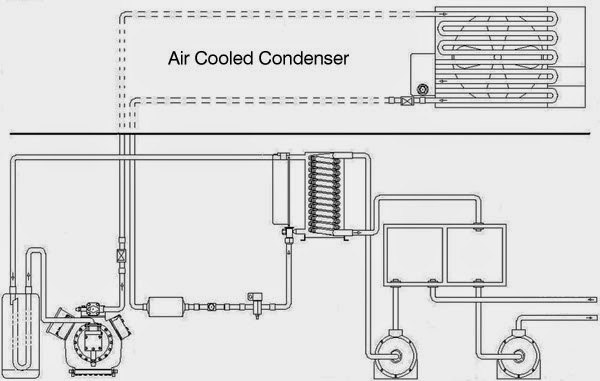
Water cooled chillers and air cooled chillers are refrigeration systems normally used to cool fluids or dehumidify air in both commercial and industrial facilities. The components of water cooled chillers and air cooled chillers are very similar. Each product contains an evaporator, condenser, compressor, and an expansion valve. The primary difference is whether air or water is used to provide the condenser cooling.


Water Cooled Vs Air Cooled

An air-cooled chiller has a condenser that is cooled by the environment air. The air-cooled chillers are preferred for small or medium installations but lately the quality improvement in their structure, allows the usage, in modular type, for large installations also. An air-cooled chiller is preferred especially in cases that there is not enough water or the water is very expensive.


The water-cooled chillers have water cooled condenser connected with cooling tower and are usually preferred for medium and large installations where there is sufficiency of water. In addition, they are also preferred in cases that is demanded constant performance of the system, independently of the ambient temperature (industrial air conditioning, air conditioning of digital systems etc), because the capacity of the water-cooled chillers are not affected by the ambient temperature fluctuations.


Flexibility

You may also note that air-cooled chillers have a much wider range in ambient operating temperatures. The wide ambient-temperature operating range allows designers' flexibility to standardize on chiller-plant designs, regardless of the data center location.


Redundancy and Effectiveness

Redundancy is essential for mission critical purpose-built data center. You should consider how long to bring the cooling system back to full load after power outages. In addition, the difficulties and cost effectiveness for installing 2N / N+1 cooling system should be carefully evaluated. Bare in mind water-cooled system should work with cooling towers and pumps.


System Maintenance and Downtime

Each chiller has basic maintenance requirements to ensure it functions at optimal levels. Though it is difficult to find a prefect cooling system with the lowest total cost of ownership (but competitive first costs), minimal operating & maintenance costs and a reduced risk of expensive downtime, we need to judged on the specific goals for every project.


Install Location

Large industrial chillers are commonly located in mechanical equipment rooms within the building close to the process in which they are cooling. Some industrial chillers may be located directly beside the process, depending on the size of the chiller and compressor. Some may even be placed completely outdoors such as rooftop of a building. Choosing which cooling system, therefore, largely depends on the building type, location, and use of the space.


About SMA

Strategic Media Asia (SMA), a critical infrastructure training and event organizer based in Hong Kong, provides an interactive environment and opportunities for members of IDC industry and engineers to exchange professional views and experience on critical infrastructure and E&M facilities.

SMA is one of the CPD Course Providers of the Chartered Institution of Building Services Engineers (CIBSE).

For details of other data center courses and seminars, please visit our website at http://www.stmedia-asia.com/trainings.html.


Wednesday, October 15, 2014

10 Recommendations for your Data Center

When you are a data center manager or consulting-specifying engineer, very few things are more unsettling than the unexpected. We hope this list helps IT and engineering professionals better anticipate these issues and prepares them with the appropriate technologies, solutions, and best practices.


Generally speaking we have 10 advice for your data center:


High-density predictions finally come true

After rapid growth early in the century, projections of double-digit rack densities have been slow to come to fruition. Average densities hovered between 6.0 and 7.4 kW per rack from 2006 to 2009, but the most recent Data Center Users’ Group (DCUG) survey predicted average rack densities will reach 12.0 kW within three years. That puts a premium on adequate UPS capacity and power distribution as well as cooling to handle the corresponding heat output.


Servers may be replaced three times before UPS or cooling systems renewal

Server refreshes happen approximately every three years. Cooling and UPS systems are expected to last much longer—sometimes decades. That means the infrastructure that organizations invest in today must be able to support—or, more accurately, scale to support—servers that may be two, three, or even four generations removed from today’s models. Modular solutions can scale to meet both short- and long-term requirements. Engineers will need to consider and make the necessary adjustments and allocations regarding day-to-day servicing and maintenance of the longer lasting power and cooling equipment.


Down time is expensive

We don't want it. The most common causes of downtime are UPS battery failure and exceeding UPS capacity. Avoid those problems by investing in the right UPS—adequately sized to support the load—and proactively monitoring and maintaining batteries. This gives engineers an opportunity to share best practices with clients and recommend battery monitoring solutions and high-end availability architecture. They can use the cost of downtime information to support recommendations and ensure clients understand how they can implement design changes and modifications that will improve availability.


Energy rebates are available for energy efficiency upgrades

Many utility providers offer energy rebates and incentives for data centers that make energy efficiency improvements. This presents an opportunity for engineers to propose high-efficiency designs and help clients receive reimbursements for upgrading legacy equipment with high-efficiency power and cooling systems. Clients may also look to engineers to assist with the often lengthy application process. Once the reimbursement has been approved, utilities will request information on actual project costs and may require follow-up measurement and verification to determine actual energy savings.


Industry codes are playing a larger role in cooling strategy

In the 2010 edition of ASHRAE 90.1: Energy Standard for Buildings Except Low-Rise Residential Buildings, the SCOP (seasonal coefficient of performance) rating was expanded to include data centers. Codes are becoming more numerous and impacting data center cooling strategies and technology developments. It is important that engineers keep abreast of new codes and regulations and the latest technologies that enable compliance.


Monitoring can be a mess

IT managers have more visibility into their data centers than ever before, but accessing and making sense of the data that comes with that visibility can be a daunting task. According to an Emerson Network Power survey of data center professionals, data center managers use, on average, at least four different software platforms to manage their physical infrastructure. Of those surveyed, 41% say they produce three or more reports for their supervisors every month, and 34% say it takes three hours or more to prepare those reports. The solution? Move toward a single monitoring and management platform that can consolidate that information and proactively manage the infrastructure to improve energy and operational efficiency, and even availability.


IT Person may be in charge of the building’s HVAC system

The gap between IT and facilities is shrinking. Traditionally, IT and data center managers have had to work through facilities when they needed more power or cooling to support increasing IT needs. That process is being streamlined. For engineers, it is important that they now incorporate all of these players into the design process. Gone are the days when the engineer had to work with only one or two individuals, usually from the facility side. Now it is a complex ecosystem comprised of IT, operations, facilities, and sometimes procurement.


That patchwork data center needs to be a quilt

In the past, data center managers and engineers freely mixed and matched components from various vendors because those systems worked together only tangentially. However, the advent of increasingly intelligent, dynamic infrastructure technologies and monitoring and management systems has increased the amount of actionable data across the data center, delivering real-time modeling capabilities that enable significant operational efficiency. IT and infrastructure systems still can work independently, but to truly leverage the full extent of their capabilities, integration is imperative.


Data center on demand is a reality

The days of lengthy design, order and deployment delays are over. Today there are modular, integrated, rapidly deployable data center solutions for any space. Integrated, virtually plug-and-play solutions that include rack, server, and power and cooling can be installed easily in a closet or conference room. On the larger end, containerized data centers can be used to quickly establish a network or to add capacity to an existing data center.


IT loads vary a lot

Many industries see extreme peaks and valleys in their network usage. Financial institutions, for example, may see heavy use during traditional business hours and virtually nothing overnight. Holiday shopping and tax seasons also can create unusual spikes in IT activity. Businesses depending on their IT systems during these times need to have the capacity to handle those peaks but often operate inefficiently during the valleys. A scalable infrastructure with intelligent controls can adjust to those highs and lows to ensure efficient operation.


About SMA

Strategic Media Asia (SMA) is one of the CPD Course Providers of the Chartered Institution of Building Services Engineers (CIBSE).

SMA, a critical infrastructure training and event organizer based in Hong Kong, provides an interactive environment and opportunities for members of IDC industry and engineers to exchange professional views and experience on critical infrastructure and E&M facilities.

For details of other data center courses and seminars, please visit our website at http://www.stmedia-asia.com/trainings.html.