Showing posts with label Cooling System. Show all posts

Tuesday, September 24, 2019

Learn MVAC / Air Conditioning System Design for Mission Critical Purposes


Air-Conditioning System Design for Critical Infrastructure (2-day)
4 -5 December 2019 - Approved CPD Course by CIBSE UK


This is a 2-day course for engineers who design or handle MVAC (Mechanical Ventilation and Air-Conditioning) equipment for mission-critical buildings / data center projects.

It highlights design principles such as psychrometric chart, cooling load calculation / estimation, etc. and the design considerations such as air distribution, availability / redundancy, common mistakes, Computer Fluid Dynamic (CFD) model, integration with MEPs (Mechanical, Electrical and Plumbing systems), etc.

You'll be able to make informed decisions about the best choices of cooling systems for mission-critical purposes and how system can best meet your project goal and SLA (Service Level Agreement).


Date: 4 - 5 December 2019 (Wednesday - Thursday)
Time: 09:00 - 17:30
Venue: 19/F, Officeplus (New Victory House),
93 - 103 Wing Lok Street, Sheung Wan, HK (Exit A2, Sheung Wan Station)


Fee: Special Rate applies for

(1) the HKIE / CIBSE or all professional membership classes in engineering; or
(2) more than 1 enrollment made at the same time


> Datacom Equipment Power Trends and Cooling Applications

-- Load trends and their application
-- Air cooling of computer equipment
-- Liquid cooling of computer equipment


> Design Consideration

-- Design criteria
-- HVAC load
-- Computer room cooling
-- Air distribution
-- Liquid cooling
-- Availability and redundancy
-- Controls
-- Integration with other MEP (Mechanical, Electrical and Plumbing) system
-- Computer Fluid Dynamics (CFD)


> Testing and Commissioning

-- Air cleanliness test
-- Heat load test
-- Factory acceptance test
-- Site acceptance test
-- Integrated performance test (IST)


> Energy Efficiency

-- Power usage effectiveness
-- Chilled water plant optimization
-- Water side and air side equipment
-- Part load operation
-- Controls and energy management
-- LEED certified data center
-- Building energy code


> Sustainable Design

-- Combined heat power plant (CHP)
-- Solar cooling
-- Geothermal cooling
-- Evaporative cooling
-- Air side economizers
-- Desiccant unit


For details, please visit www.stmedia-asia.com/newsletter_6.html.


Enrollment & Registration


Kindly complete and return an Application Form for seat reservation. Online Registration is also acceptable. Your seat will be confirmed once the payment is allocated. Thank you.


About the Organizer

Strategic Media Asia Limited (SMA) is one of the approved CPD course providers of the Chartered Institution of Building Services Engineers (CIBSE) UK. The mission is to provide an interactive environment and opportunities for the members of critical facilities industry and building services engineers to exchange professional views and experience.

For details, please visit www.stmedia-asia.com/about.html.


Subscribe to our Knowledge Blog in Critical Infrastructure Design

RELIABILITY & REDUNDANCY MATTER - Your facilities and IT infrastructure are complex that are different from general buildings and require special design and operation knowledge and skill. Understanding the design considerations and avoiding costly downtime are critical.
Subscribe to our Knowledge Blog (http://green-data.blogspot.com or http://data-center-design.tumblr.com), share your view and get monthly readings online. All topics focus on key components and considerations of designing / operating mission-critical facilities and infrastructure:-

(1) Site Selection,
(2) Space Planning,
(3) Cooling,
(4) Redundancy,
(5) Fire Suppression,
(6) Meet Me Rooms,
(7) UPS Selection,
(8) Raised Floor,
(9) Code & Standards,
(10) Transformers and Harmonic Distortion,
(11) Multi-mode UPS Systems,
(12) Electrical Rooms,
(13) Generator Systems,
(14) Generator Fuel Systems

(15) Battery Systems, etc.
 

P.S. Think your team might also be interested? Pass it on ›


Strategic Media Asia Limited

Connecting IT, Facilities and Design

T (852) 2117 3893  |  F (852) 2184 9978
Room 403, 4th Floor, Dominion Centre, 43 - 59 Queen's Road East, Hong
Kong


http://www.stmedia-asia.com  |  http://green-data.blogspot.com 


Wednesday, October 25, 2017

Understand the Cooling and Ventilation System Design for Data Center


Air Conditioning System Design for Data Center
(23 - 24 March 2017, approved CPD course by CIBSE UK)


It targets to engineers involved in designing or handling HVAC (Heating, Ventilation and Air Conditioning) equipment for mission critical facilities, IT infrastructure and data center projects.

All sessions highlight design principles such as psychrometric chart, cooling load calculation / estimation, etc. and the design considerations such as air distribution, availability / redundancy, common mistakes, Computer Fluid Dynamic (CFD) model, integration with MEPs (Mechanical, Electrical and Plumbing system), etc.

You'll be able to make informed decisions about the best choices of cooling systems for mission critical purposes and how system can best meet the project goal and SLA (Service Level Agreement).


Date: 23 - 24 March 2017 (Thursday - Friday)
Time: 10:00 - 17:30
Venue: 14/F, On Lok Yuen Building, 25-27A Des Voeux Road Central, Hong Kong
Fee: Special rate for CIBSE / HKIE all membership classes


> Datacom Equipment Power Trends and Cooling Applications

-- Load trends and their application
-- Air cooling of computer equipment
-- Liquid cooling of computer equipment


> Design Consideration

-- Design criteria
-- HVAC load
-- Computer room cooling
-- Air distribution
-- Liquid cooling
-- Availability and redundancy
-- Controls
-- Integration with other MEP (Mechanical, Electrical and Plumbing) system
-- Computer Fluid Dynamics (CFD)


> Testing and Commissioning

-- Air cleanliness test
-- Heat load test
-- Factory acceptance test
-- Site acceptance test
-- Integrated performance test (IST)


> Energy Efficiency

-- Power usage effectiveness
-- Chilled water plant optimization
-- Water side and air side equipment
-- Part load operation
-- Controls and energy management
-- LEED certified data center
-- Building energy code


> Sustainable Design

-- Combined heat power plant (CHP)
-- Solar cooling
-- Geothermal cooling
-- Evaporative cooling
-- Air side economizers
-- Desiccant unit


For details, please visit http://www.stmedia-asia.com/newsletter_6.html.


Get Ready to Become a Registered Specialist Contractor (Ventilation)
(29 April & 6 May 2017, Saturday)


Designed for enterprises in ventilation / air-conditioning engineering - Technical Director (TD), Authorized Signatory (AS) or other officers, our speaker introduces the register requirement, interview technique, Buildings Ordinance, ventilation and fire safety, occupational safety, health and environmental protection, etc.

The preparatory course helps local engineers and enterprises to facilitate compliance with the Buildings Ordinance in Hong Kong and to get ready to become a Registered Specialist Contractor for Ventilation Works (RSC-V).


Date: 29 April + 6 May 2017 (Saturday) - 11th round
Time: 9:00 - 13:00 / 13:30
Venue: 14/F, On Lok Yuen Building, 25-27A Des Voeux Road Central, Hong Kong
Fee: Early bird discount available for payment & application made before March 17, 2017


The RSC-V preparatory course is also available online www.stmedia-asia.com/aircon.html.


About us


Strategic Media Asia (SMA) is one of the approved CPD course providers of the Chartered Institution of Building Services Engineers (CIBSE) UK. The team exists to provide an interactive environment and opportunities for members of ICT industry and facilities' engineers to exchange professional views and experience.

SMA connects IT, Facilities and Design. For the Data Center Consideration Series, please visit 


(1) Site Selection,
(2) Space Planning,
(3) Cooling,
(4) Redundancy,
(5) Fire Suppression,
(6) Meet Me Rooms,
(7) UPS Selection, and
(8) Raised Floor

All topics focus on key components and provide technical advices and recommendations for designing a data center and critical facilities.


Monday, May 30, 2016

Thank you for coming to the Data Center Technical Visit in May 2016

A Big Thank You to all visitors, who join the data center technical visit, and the coordination granted by the data center team in Tseung Kwan O, Hong Kong!

The half-day visit on 20 May 2016 enables us to create an interactive environment for members of IDC industry and infrastructure engineers and to exchange professional views and experience on mission critical facilities (cooling system, electrical system, fire suppression system, NOC, carrier-neutral meet-me rooms (MMR), etc.) and data center services.


We look forward to cooperating with the industry and organizing the similar event in the near future!


About the Organizer

Strategic Media Asia (SMA) is one of the approved CPD course providers of the Chartered Institution of Building Services Engineers (CIBSE) UK.

The team exits provide an interactive environment and opportunities for members of ICT industry and facilities' engineers to exchange professional views and experience.

SMA connects IT, Facilities and Design. For accreditation details and background, please visit www.stmedia-asia.com/about.html.

Wednesday, November 19, 2014

Water Cooled or Air Cooled Chillers

As per the critical purpose of a data center, all equipment must be reliable and easy to operate. It’s important to make sure the company’s focus can be on the critical nature of data center operations instead of HVAC (cooling) system management.

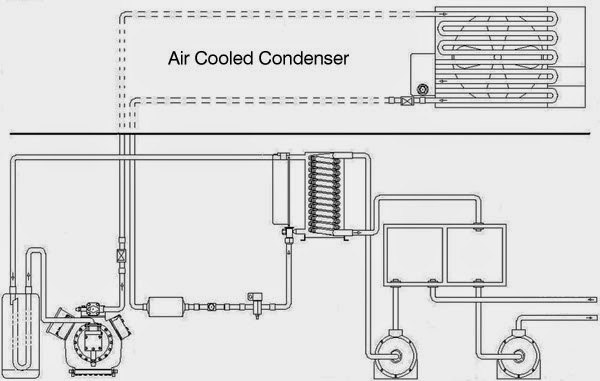
Water cooled chillers and air cooled chillers are refrigeration systems normally used to cool fluids or dehumidify air in both commercial and industrial facilities. The components of water cooled chillers and air cooled chillers are very similar. Each product contains an evaporator, condenser, compressor, and an expansion valve. The primary difference is whether air or water is used to provide the condenser cooling.


Water Cooled Vs Air Cooled

An air-cooled chiller has a condenser that is cooled by the environment air. The air-cooled chillers are preferred for small or medium installations but lately the quality improvement in their structure, allows the usage, in modular type, for large installations also. An air-cooled chiller is preferred especially in cases that there is not enough water or the water is very expensive.


The water-cooled chillers have water cooled condenser connected with cooling tower and are usually preferred for medium and large installations where there is sufficiency of water. In addition, they are also preferred in cases that is demanded constant performance of the system, independently of the ambient temperature (industrial air conditioning, air conditioning of digital systems etc), because the capacity of the water-cooled chillers are not affected by the ambient temperature fluctuations.


Flexibility

You may also note that air-cooled chillers have a much wider range in ambient operating temperatures. The wide ambient-temperature operating range allows designers' flexibility to standardize on chiller-plant designs, regardless of the data center location.


Redundancy and Effectiveness

Redundancy is essential for mission critical purpose-built data center. You should consider how long to bring the cooling system back to full load after power outages. In addition, the difficulties and cost effectiveness for installing 2N / N+1 cooling system should be carefully evaluated. Bare in mind water-cooled system should work with cooling towers and pumps.


System Maintenance and Downtime

Each chiller has basic maintenance requirements to ensure it functions at optimal levels. Though it is difficult to find a prefect cooling system with the lowest total cost of ownership (but competitive first costs), minimal operating & maintenance costs and a reduced risk of expensive downtime, we need to judged on the specific goals for every project.


Install Location

Large industrial chillers are commonly located in mechanical equipment rooms within the building close to the process in which they are cooling. Some industrial chillers may be located directly beside the process, depending on the size of the chiller and compressor. Some may even be placed completely outdoors such as rooftop of a building. Choosing which cooling system, therefore, largely depends on the building type, location, and use of the space.


About SMA

Strategic Media Asia (SMA), a critical infrastructure training and event organizer based in Hong Kong, provides an interactive environment and opportunities for members of IDC industry and engineers to exchange professional views and experience on critical infrastructure and E&M facilities.

SMA is one of the CPD Course Providers of the Chartered Institution of Building Services Engineers (CIBSE).

For details of other data center courses and seminars, please visit our website at http://www.stmedia-asia.com/trainings.html.


Wednesday, October 15, 2014

10 Recommendations for your Data Center

When you are a data center manager or consulting-specifying engineer, very few things are more unsettling than the unexpected. We hope this list helps IT and engineering professionals better anticipate these issues and prepares them with the appropriate technologies, solutions, and best practices.


Generally speaking we have 10 advice for your data center:


High-density predictions finally come true

After rapid growth early in the century, projections of double-digit rack densities have been slow to come to fruition. Average densities hovered between 6.0 and 7.4 kW per rack from 2006 to 2009, but the most recent Data Center Users’ Group (DCUG) survey predicted average rack densities will reach 12.0 kW within three years. That puts a premium on adequate UPS capacity and power distribution as well as cooling to handle the corresponding heat output.


Servers may be replaced three times before UPS or cooling systems renewal

Server refreshes happen approximately every three years. Cooling and UPS systems are expected to last much longer—sometimes decades. That means the infrastructure that organizations invest in today must be able to support—or, more accurately, scale to support—servers that may be two, three, or even four generations removed from today’s models. Modular solutions can scale to meet both short- and long-term requirements. Engineers will need to consider and make the necessary adjustments and allocations regarding day-to-day servicing and maintenance of the longer lasting power and cooling equipment.


Down time is expensive

We don't want it. The most common causes of downtime are UPS battery failure and exceeding UPS capacity. Avoid those problems by investing in the right UPS—adequately sized to support the load—and proactively monitoring and maintaining batteries. This gives engineers an opportunity to share best practices with clients and recommend battery monitoring solutions and high-end availability architecture. They can use the cost of downtime information to support recommendations and ensure clients understand how they can implement design changes and modifications that will improve availability.


Energy rebates are available for energy efficiency upgrades

Many utility providers offer energy rebates and incentives for data centers that make energy efficiency improvements. This presents an opportunity for engineers to propose high-efficiency designs and help clients receive reimbursements for upgrading legacy equipment with high-efficiency power and cooling systems. Clients may also look to engineers to assist with the often lengthy application process. Once the reimbursement has been approved, utilities will request information on actual project costs and may require follow-up measurement and verification to determine actual energy savings.


Industry codes are playing a larger role in cooling strategy

In the 2010 edition of ASHRAE 90.1: Energy Standard for Buildings Except Low-Rise Residential Buildings, the SCOP (seasonal coefficient of performance) rating was expanded to include data centers. Codes are becoming more numerous and impacting data center cooling strategies and technology developments. It is important that engineers keep abreast of new codes and regulations and the latest technologies that enable compliance.


Monitoring can be a mess

IT managers have more visibility into their data centers than ever before, but accessing and making sense of the data that comes with that visibility can be a daunting task. According to an Emerson Network Power survey of data center professionals, data center managers use, on average, at least four different software platforms to manage their physical infrastructure. Of those surveyed, 41% say they produce three or more reports for their supervisors every month, and 34% say it takes three hours or more to prepare those reports. The solution? Move toward a single monitoring and management platform that can consolidate that information and proactively manage the infrastructure to improve energy and operational efficiency, and even availability.


IT Person may be in charge of the building’s HVAC system

The gap between IT and facilities is shrinking. Traditionally, IT and data center managers have had to work through facilities when they needed more power or cooling to support increasing IT needs. That process is being streamlined. For engineers, it is important that they now incorporate all of these players into the design process. Gone are the days when the engineer had to work with only one or two individuals, usually from the facility side. Now it is a complex ecosystem comprised of IT, operations, facilities, and sometimes procurement.


That patchwork data center needs to be a quilt

In the past, data center managers and engineers freely mixed and matched components from various vendors because those systems worked together only tangentially. However, the advent of increasingly intelligent, dynamic infrastructure technologies and monitoring and management systems has increased the amount of actionable data across the data center, delivering real-time modeling capabilities that enable significant operational efficiency. IT and infrastructure systems still can work independently, but to truly leverage the full extent of their capabilities, integration is imperative.


Data center on demand is a reality

The days of lengthy design, order and deployment delays are over. Today there are modular, integrated, rapidly deployable data center solutions for any space. Integrated, virtually plug-and-play solutions that include rack, server, and power and cooling can be installed easily in a closet or conference room. On the larger end, containerized data centers can be used to quickly establish a network or to add capacity to an existing data center.


IT loads vary a lot

Many industries see extreme peaks and valleys in their network usage. Financial institutions, for example, may see heavy use during traditional business hours and virtually nothing overnight. Holiday shopping and tax seasons also can create unusual spikes in IT activity. Businesses depending on their IT systems during these times need to have the capacity to handle those peaks but often operate inefficiently during the valleys. A scalable infrastructure with intelligent controls can adjust to those highs and lows to ensure efficient operation.


About SMA

Strategic Media Asia (SMA) is one of the CPD Course Providers of the Chartered Institution of Building Services Engineers (CIBSE).

SMA, a critical infrastructure training and event organizer based in Hong Kong, provides an interactive environment and opportunities for members of IDC industry and engineers to exchange professional views and experience on critical infrastructure and E&M facilities.

For details of other data center courses and seminars, please visit our website at http://www.stmedia-asia.com/trainings.html.


Monday, October 28, 2013

Now for Sale - Training Manual of "HVAC Design and Cooling Specialist for Data Center Efficiency"


HVAC DESIGN & COOLING SPECIALIST FOR DATA CENTER EFFICIENCY


This is a training manual developed by a team of experienced Chartered Engineers (CEng). For data center operators and facilities managers, we help you to understand key challenges and consider different factors, from design, testing, commissioning, sustainability and efficiency, of HVAC (Heating, Ventilation, and Air Conditioning) system for data centers.

In addition, the manual details the guidelines of data centers’ cooling criteria, HVAC load development, air distribution, liquid cooling, contamination, availability and redundancy, Computer Fluid Dynamic (CFD) model, energy efficiency, etc., from general theory to technical implementation.

To predict a data center’s power and heat loads over the years ahead is the hardest thing for data center owners. It introduces datacom power trends and cooling applications showing expected growth in power density for different types of computing equipment out to 2020.


Total Number of Page: 106
Total Number of Slide Contained: 204
Size: 210mm x 300mm x 10mm
Language: English
Color: Black & White
CD / Soft Copy: Not Included

THE MANUAL CONTENT


Datacom Equipment Power Trends and Cooling Applications

(a) load trends and their applications
(b) air cooling and liquid cooling of computer equipment

Design Consideration

(a) design criteria and HVAC load
(b) computer room cooling and air distribution
(c) liquid cooling
(d) availability and redundancy
(e) integration with other MEP system
(f) controls and computer fluid dynamics

Testing and Commissioning

(a) air cleanliness test, heat load test
(b) factory acceptance test and site acceptance test
(c) integrated performance test (IST)

Sustainable Design

(a) combined heat power plant (CHP)
(b) solar, geothermal and evaporative cooling method
(c) air side economizers
(d) desiccant unit

Energy Efficiency

(a) power usage effectiveness (PUE)
(b) chilled water plant optimization
(c) water side and air side equipment
(d) part load operation
(e) controls and energy management
(f) LEED certified data center
(g) building energy code


ORDER METHOD

Please contact us at info@stmedia-asia.com
The manual is also available on eBay: http://www.ebay.com/usr/st-media


Monday, February 18, 2013

Data Center CFD Modeling becomes user-friendly

Over the past several years, Computational Fluid Dynamics (CFD) modeling has proven to be a reliable method for optimizing the energy efficiency of the data center as well as accurately predicting the failure-mode conditions associated with cooling system failure.

For the past 30 years, CFD has been heavily used in industries such as aerospace and F1 racing, as the systems are complex, exotic and expensive. But things are beginning to change. Using advanced graphical user interfaces (GUIs) combined with a “SaaS” (software as a service) methods of application delivery, data center designers and facility managers are able to use the same technology to design data centers that the Ferrari F1 team uses to design its race cars, and at a much lower cost of entry. This approach greatly broadens access to this technology, which has been well proven in optimizing energy efficiency, reducing hot spots and accurately predicting cooling failure.
 

Benefits of CFD Monitoring

 
PUE Prediction
 
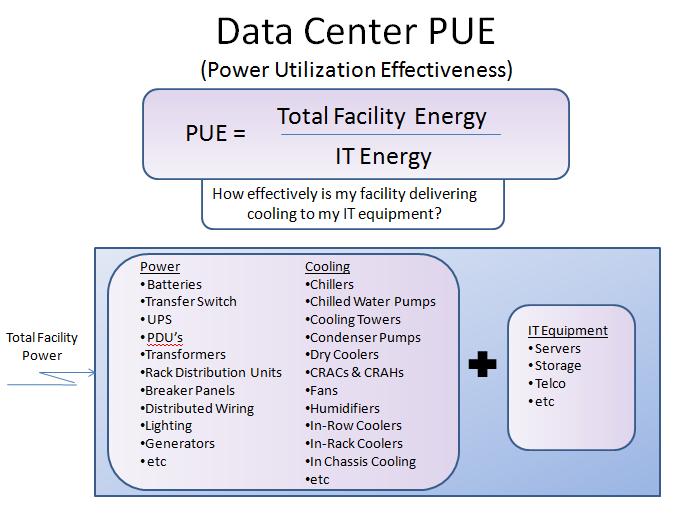
The energy to power a data center is composed of the power to drive the servers plus the power to cool the servers and any other ancillary devices such as PDUs, pumps and lighting. A common method for measuring the energy efficiency of a data center is PUE (power utilization effectiveness). The PUE of a data center is expressed in the relationship shown in Figure 1. A “good” data center is represented by a PUE of 1.2 or lower, suggesting that an additional 20% of the total power to operate the data center is powering non-IT equipment.
 
 
When reviewing the items that constitute the non-IT components of the calculations, the dominant parameters are related to the power required to drive the cooling systems. The role of CFD modeling in any of these designs is to insure that the cool air coming from the ducts, tiles or CRAH outlet reaches all the servers uniformly. This process of modeling the airflow and the resulting convective heat transfer is essential to the overall design and operation of a data center, particularly as it relates to failure-mode studies.
 
Cooling Failure Prediction
 
Failure model prediction is a key benefit that CFD modeling can provide. All cooling units need to be serviced periodically, and they completely fail occasionally. Predicting the thermal condition of the room ahead of the failure is vitally important to the data center operator. Knowing which servers will need to be shut down, or which cooling units are the most critical to the room, can be accurately and precisely predicted well in advance, and procedures can then be developed to follow in those cases.


What to Look for in a CFD Model

 
Here are some key factors to consider when seeking a CFD model:
 
  • User friendly: The last thing you need is another complex system—be sure to choose a model that is easy to use, is easy to understand and can be easy displayed to others (such as the C-Suite) who may not be as tech savvy.
  • Scalability: Be sure to choose a solution that will scale with you as new components (files, CRACs, racks, tiles, servers and so on) are added.
  • Cloud-Based: The cloud enables lower upfront investment, as it doesn’t require a dedicated server in your data center.
  • Flexible and Extensible: Be sure the system is flexible and extensible for integration with either upstream or downstream applications. For example, data from other DCIM applications can be fed directly into the system to speed model preparation.
  • Maximum Output: Look for a system that has options for output reports to ensure variety in how the information can be presented (graphs, charts, etc.). Every organization has its own methods, and this feature will benefit the usefulness of the data—it is meaningless unless it can convey the message to decision makers.

Adopted from http://www.datacenterjournal.com