Showing posts with label Data Center. Show all posts

Tuesday, June 15, 2021

GOVirtual Business Expo & Conference on 10-12 Jun 2021


A BIG THANK YOU to the IOT HK Association (IoTHK) which offered opportunities for SMA to exhibit in the GOVirtual Business Expo & Conference between 10 and 12 June 2021 in the Hong Kong Convention and Exhibition Centre. The GOVirtual Business Expo & Conference was the 1st physical B2B2C event in Hong Kong since the pandemic of COVID-19.


Further to our learning programs in data center infrastructure and critical facilities, SMA showcased the training portfolio in Big Data, Internet of Things (IoT), Blockchain Technology & Artificial Intelligence (AI) during the exhibition.


About Us

SMA combines with professional Chartered Engineers (CEng) from the Institute of Engineering Technology (IET), the Chartered Institute of Building Services Engineers (CIBSE) and the Hong Kong Institution of Engineers (HKIE). Our engineers have more than 20 years experience in data center design & build, building services engineering and energy conservation in the private and public sectors.

The team has been preparing the engineers and IT personnel to face any challenges in data centers and critical facilities of any size, in any location since 2011. For design considerations / knowledge hub in data center and critical infrastructure, please visit 

(1) Site Selection,
(2) Space Planning,
(3) Cooling,
(4) Redundancy,
(5) Fire Suppression,
(6) Meet Me Rooms,
(7) UPS Selection,
(8) Raised Floor,
(9) Code & Standards,
(10) Transformers and Harmonic Distortion,
(11) Multi-mode UPS Systems,(12) Electrical Rooms,
(13) Generator Systems,
(14) Generator Fuel Systems,
(15) Battery Systems,
(16) Earthing / Grounding and Bonding, etc.


Friday, October 23, 2020

Learn How to Design Electrical + Air Conditioning (MVAC) Systems for Critical Purposes (17 & 18 Dec 2020 + 14 & 15 Jan 2021)


2-day CPD Course in Electrical Design for Mission Critical Supply
(17 and 18 December 2020 - Approved CPD Course by CIBSE UK)
 
 
Mission-critical infrastructure have particular power requirements that significantly impact how they are designed and operated. We prepare individual to fully understand the high voltage system design & build by exploring the best practices and sharing the instructor's experience. You will gain insight into the critical supply system, from power components to distributions and efficiency; from power requirements to sizing, design, testing and commissioning.

All sections are conducted by Chartered Engineer (CEng) who have more than 20 years experience in electrical engineering, project management, sustainable engineering and facility engineering for critical services.
 
 
-- Concept on primary supply and secondary supply
-- Power flow in mission critical supply system
-- Features of major equipment for critical supply
 
  > Uninterrupted power supply and power storage
  > Backup generator
  > Automatic transfer switch
  > Static transfer switch
  > Isolation transformer
 
-- Efficiency assessment
-- Power quality review
-- Configuration diagram of critical supply (N+1 / 2N) design & analysis
-- Review of cable sizing to incorporate harmonics content
-- Earthing system design
-- Testing and commissioning requirements
-- Brief of Systems Merging Appraisal Test (SMAT)


Instructor: Ir C.K. Chan,
CEng, CEnv, FSOE, FIplantE, MIET, MHKIE, CSME, REW H0 C0


Date: 17 - 18 December 2020 (Thursday - Friday)
Time: 10:00 ~ 17:30
Venue: Unit 1226A, Star House, 3 Salisbury Road, Tsim Sha Tsui, Hong Kong
Language: Cantonese (English Courseware)
Fee: Special rate is applicable for

(1) all membership classes of HKIE / CIBSE / professional organizations in engineering; or
(2) more than 1 enrollment made at the same time
 
 
For the course details, please call (852) 2117 3893 or visit www.stmedia-asia.com/newsletter_6.html. 


2-day CPD Course in Air-Conditioning System Design for Critical Infrastructure
(14 and 15 January 2021 - Approved CPD Course by CIBSE UK)
 
 
This is a practical course for engineers who design or handle MVAC (Mechanical Ventilation and Air-Conditioning) equipment for mission-critical buildings / data center projects. The course highlight design principles such as psychrometric chart, cooling load calculation / estimation, etc. and the design considerations such as air distribution, availability / redundancy, common mistakes, Computer Fluid Dynamic (CFD) model, integration with MEPs (Mechanical, Electrical and Plumbing systems), etc.
 
You'll be able to make informed decision about the best choices of cooling systems for mission-critical purposes and how that system fulfill your project goal and SLA (Service Level Agreement).
 

> Datacom Equipment Power Trends and Cooling Applications
 
  -- Load trends and their application
  -- Air cooling of computer equipment
  -- Liquid cooling of computer equipment

> Design Consideration
 
  -- Design criteria
  -- HVAC load
  -- Computer room cooling
  -- Air distribution
  -- Liquid cooling
  -- Availability and redundancy
  -- Controls
  -- Integration with other MEP (Mechanical, Electrical and Plumbing) system 
  -- Computer Fluid Dynamics (CFD)

> Testing and Commissioning
 
  -- Air cleanliness test
  -- Heat load test
  -- Factory acceptance test
  -- Site acceptance test
  -- Integrated performance test (IST)

> Energy Efficiency
 
  -- Power usage effectiveness
  -- Chilled water plant optimization
  -- Water side and air side equipment
  -- Part load operation
  -- Controls and energy management
  -- LEED certified data center
  -- Building energy code

> Sustainable Design
 
  -- Combined heat power plant (CHP)
  -- Solar cooling
  -- Geothermal cooling
  -- Evaporative cooling
  -- Air side economizers
  -- Desiccant unit


Instructor: Ir Samuel K.P. Lip,
CEng, RPE, FCIBSE, MIET, MIFireE, MIMechE, MASHRAE, MHKIE, MCIH, REA, REW C0


Date: 14 - 15 January 2021 (Thursday - Friday)
Time: 10:00 ~ 17:30
Venue: Unit 1226A, Star House, 3 Salisbury Road, Tsim Sha Tsui, Hong Kong
Language: Cantonese (English Courseware)
Fee: Special rate is applicable for

(1) all membership classes of HKIE / CIBSE / professional organizations in engineering; or
(2) more than 1 enrollment made at the same time
 
 
For the course details, please call (852) 2117 3893 or visit
www.stmedia-asia.com/newsletter_6.html.


Enrollment & Registration
 
Kindly complete and return an Application Form (attached) together with a crossed cheque made payable to "Strategic Media Asia Limited" - Room 403, 4th Floor, Dominion Centre, 43 - 59 Queen's Road East, Hong Kong.
 

About the Organizer
 
Strategic Media Asia Limited (SMA) - Connecting IT, Facilities & Design - is one of the approved CPD course providers of the Chartered Institution of Building Services Engineers (CIBSE). The mission is to provide an interactive environment and opportunities for the engineers to exchange professional views and experience on critical infrastructure and data center services.

For details, please visit www.stmedia-asia.com/about.html.


Strategic Media Asia Limited
Connecting IT, Facilities and Design

 
T (852) 2117 3893  |  F (852) 2184 9978
 
Room 403, 4th Floor, Dominion Centre, 43 - 59 Queen's Road East, Hong Kong
http://www.stmedia-asia.com  |  http://green-data.blogspot.com

Tuesday, May 12, 2020

Electrical Distribution System in a Data Center: Medium-voltage (MV) and Low-voltage (LV) switchgear

So far we explored the Electrical Distribution System in a Data Center. The critical supply from the utility / transformer / generator to the load is enabled by various types of power equipment. One of the key components of the critical supply is switchgear.


Medium-voltage (MV) Switchgear


Medium-voltage switchgear is generally located in the power substation of large-capacity data centers (i.e. greater than 1 MW IT load). This equipment is typically fed directly from the utility and usually marks the utility service entrance to the building.

If a MV generator is present, it also feeds the MV switchgear. The following figure shows an example of MV switchgear single line diagram:-


10kV MV Switchgear Single Line Diagram


Other than simply distributing power, the MV switchgear is responsible for disconnecting faults and controlling the MV power distribution system, for example, when isolating a redundant section for maintenance.

Basically medium-voltage switchgear is the assembly of four cubicles as shown in the Figure above: two incoming units (incomers) or main section, outgoing units or feeder section, voltage metering unit, and bus section or tie section/breaker.

The outgoing unit distributes three-phase power to the primary (upstream) side of the MV / LV transformer. Due to safety distances at MV, typically each cubical is limited to only one MV circuit breaker.


The following are some typical electrical parameters for MV switchgear. Values for these parameters vary according to local regulations:


Voltage ratings:-

Two key voltage ratings for MV switchgear are rated voltage and rated lightning impulse voltage (equivalent to the ANSI basic impulse level i.e. BIL). For example, an ANSI MV switchgear solution may have a rated voltage of 15kV and 95kV BIL (i.e. impulse voltage).


Current ratings:-

The rated current of MV switchgear is always specified by the manufacturer. Another key current rating is the rated short-circuit withstand current similar to the North American National Electric Code’s (NEC) short-circuit current rating (SCCR).

For example, an ANSI MV switchgear solution may have a rated current of 1200A and 40kA SCCR.


Low-voltage (LV) Switchgear


Typically LV switchgear / switchboard is located in the electrical room and marks the utility service entrance for data centers less than 1 MW.

An example of LV switchgear is shown in figures below. If a LV generator is used, the generator would feed the LV switchgear. Apart from distributing power, the LV switchgear is responsible for disconnecting faults and controlling the LV power distribution system.

Note that in the case of a medium voltage generator, this transferring function occurs at the medium voltage switchgear level.


In real situation, the single line diagram will look something like this:-


A device known as an Automatic Transfer Switch (ATS) has traditionally been used to switch between utility and generator. However, the current trend is to have LV breakers perform this function in lieu of the ATS device. Also, there is a practice of using PLC logic for switching between utility and generator sources.

The following devices are always assembled in LV switchgear: horizontal busbar, vertical busbar, circuit breakers, meters, switches, surge arresters, relays, etc.


LV switchgear / switchboard installed in a data center is typically a combination of some of the following functional units: incoming feeder from the secondary side of the MV / LV transformer or LV generators, power control center (PCC, i.e. for downstream UPS), motor control center (MCC, i.e. for pumps), the power factor correction/harmonic filtering and the bus connections.


The following are key electrical parameters of the LV switchgear. The values for these parameters vary according to local regulations:


Voltage ratings:-

Two key voltage ratings for LV switchgear are rated voltage and rated lightning impulse voltage. ANSI does not specify the impulse voltage for LV switchgear. For example, an IEC LV switchboard solution may have a rated voltage of 690V and 12kV rated impulse withstand voltage.


Current ratings:-

The rated current of LV switchgear is always specified by the manufacturer. Another key current rating is the rated short-circuit withstand current similar to the North American National Electric Code’s (NEC) short-circuit current rating (SCCR).

For example, an IEC switchgear solution may have a rated current of 5000A and 85kA rated short-circuit withstand current.


About Us

SMA combines with professional Chartered Engineers (CEng) from the Institute of Engineering Technology (IET), the Chartered Institute of Building Services Engineers (CIBSE) and the Hong Kong Institution of Engineers (HKIE). Our engineers have more than 20 years experience in data center design & build, building services engineering and energy conservation in the private and public sectors.

The team prepares the engineers and IT personnel to face any challenges in data centers and critical facilities of any size, in any location. For other design considerations / topics in data center and critical infrastructure, please visit 

(1) Site Selection,
(2) Space Planning,
(3) Cooling,
(4) Redundancy,
(5) Fire Suppression,
(6) Meet Me Rooms,
(7) UPS Selection,
(8) Raised Floor,
(9) Code & Standards,
(10) Transformers and Harmonic Distortion,
(11) Multi-mode UPS Systems,(12) Electrical Rooms,
(13) Generator Systems,
(14) Generator Fuel Systems,
(15) Battery Systems,
(16) Earthing / Grounding and Bonding, etc.


Thursday, March 12, 2020

Electrical Distribution System in a Data Center


There are many different loads in the data center, such as IT devices, air conditioners (CRAC Units), pumps, lighting, etc. The critical supply from the utility / transformer / generator to the load is enabled by various types of power equipment. We are going to illustrate these equipment that are critical and without which it would not be possible to operate the data center.

Figure 1 is a block diagram of an electrical distribution system showing the name and the typical location of the electrical distribution equipment in a data center and the power flow path (Uptime Institute Tier Level II, N+1 Design) . This diagram is only an example of an electrical architecture and attempts to include all the possible major types of equipment used and their typical location in a data center. In the real world, a typical data center electrical design has much more complexity and diversity than that in this diagram.


Uptime Institute Tier II, N+1 Design

Figure 1 

Uptime Institute Tier III Design

Uptime Institute Tier IV, 2N+1 Design


Tracing the flow of power along its path (starting from the utility to the IT load) in the figure 1 above. It shows 8 essential facilities are critical for the power supply. This facilities distribute power to the downstream loads and also protect the power distribution system in the data center:

  • Medium-voltage switchgear
  • MV/LV transformer
  • Low-voltage switchgear / switchboard / automatic transfer switch (ATS)
  • UPS system with input/output switchboard and UPS distribution switchboard
  • Power distribution Units (PDUs) and remote power panels (RPPs)
  • Busway
  • Panelboard
  • Rack PDUs (rPDUs) / outlet strips


All facilities above, except for rack PDUs (rPDUs), are considered to be assemblies containing circuit breakers, switches, various types of relays, buses and connections, and control and auxiliary devices. Each device is optimized for long life and ease of maintenance.

The IEC 61947 & IEC 62271, which specifies the HV and LV switchgear terminology, considers switchboard to be the same as switchgear. For some regions like, North American, switchgear and switchboard are specified differently by ANSI and UL standards.


About Us


SMA combines with professional Chartered Engineers (CEng) from the Institute of Engineering Technology (IET), the Chartered Institute of Building Services Engineers (CIBSE) and the Hong Kong Institution of Engineers (HKIE). Our engineers have more than 20 years experience in data center design & build, building services engineering and energy conservation in the private and public sectors.

The team prepares the engineers and IT personnel to face any challenges in data centers and critical facilities of any size, in any location. For other design considerations / topics in data center and critical infrastructure, please visit 


(1) Site Selection,
(2) Space Planning,
(3) Cooling,
(4) Redundancy,
(5) Fire Suppression,
(6) Meet Me Rooms,
(7) UPS Selection,
(8) Raised Floor,
(9) Code & Standards,
(10) Transformers and Harmonic Distortion,
(11) Multi-mode UPS Systems,
(12) Electrical Rooms,
(13) Generator Systems,
(14) Generator Fuel Systems,
(15) Battery Systems,

(16) Earthing / Grounding and Bonding, etc.


Saturday, January 18, 2020

Part Time Vancancies for Local Engineers in Critical Infrastructure (Maintenance)

Strategic Media Asia Limited (SMA) is one of the approved CPD course providers of the Chartered Institution of Building Services Engineers (CIBSE). Our mission is to provide an interactive environment and opportunities for the members of IT, critical facilities and building services engineers to exchange professional views and experience.


One of the leading data center owners in Hong Kong is looking for 2 - 3 part time engineers for the general maintenance of critical facilities in their data centers (ranged from Tier 3 to Tier 4-Ready) in Hong Kong. The critical facilities include

(1) CRAC Systems, Cooling Towers; 
(2) UPS, PDUs, Switchgear, Transformers and other Critical Supply Systems.


Those who interest in the opportunity and completed any one of our critical facilities courses:-

- Data Center / Critical Facilities Design & Infrastructure Engineering (2-day)
- Air Conditioning System Design for Critical Infrastructure / Data Center (2-day)
- Electrical Design for Mission Critical Supply (2-day)
- Project Management for Critical Facilities: From Design to Commissioning (2-day)


with relevant experience in data center environment / critical infrastructure are welcome to apply. Remittance will be based on work hours (in hourly rate). For details, please send your CV and salary expectation to info @ stmedia-asia.com. Only engineers with HKID card / working permit in Hong Kong will be entitled and referred. Thank you.


About Us


SMA combines with professional Chartered Engineers (CEng) from the Institute of Engineering Technology (IET), the Chartered Institute of Building Services Engineers (CIBSE) and the Hong Kong Institution of Engineers (HKIE). Our engineers have more than 20 years experience in data center design & build, building services engineering and energy conservation in the private and public sectors.

The team prepares the engineers and IT personnel to face any challenges in data centers and critical facilities of any size, in any location. For other design considerations / topics in data center and critical infrastructure, please visit 


(1) Site Selection,
(2) Space Planning,
(3) Cooling,
(4) Redundancy,
(5) Fire Suppression,
(6) Meet Me Rooms,
(7) UPS Selection,
(8) Raised Floor,
(9) Code & Standards,
(10) Transformers and Harmonic Distortion,
(11) Multi-mode UPS Systems,
(12) Electrical Rooms,
(13) Generator Systems,
(14) Generator Fuel Systems,
(15) Battery Systems,

(16) Earthing / Grounding and Bonding, etc.


Friday, November 1, 2019

Technical Visit for a Tier IV-Ready Data Center in Tseung Kwan O, Hong Kong

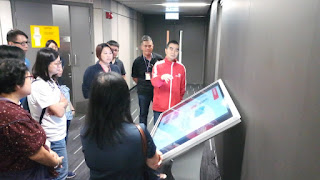
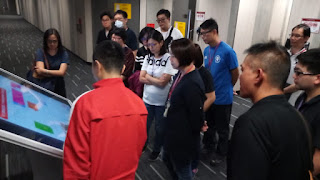
Organized jointly with the China Unicom (Hong Kong) Limited, the half-day data center technical visit was successfully completed on 18 October 2019.

The target of the site tour is to demonstrate the critical power supply, cooling facilities, data hall, infrastructure management, IoT technology and the cloud / big data solutions by one of the leading data center (Tier IV-Ready) in Hong Kong.

Further to our data center facilities design courses, the tour also provides an interactive environment and opportunity for engineers to exchange professional views on mission-critical facilities with hands-on and immersive experience.


Strategic Media Asia (SMA) -
Connecting IT, Facilities and Design


SMA combines with professional Chartered Engineers (CEng) from the Institute of Engineering Technology (IET), the Chartered Institute of Building Services Engineers (CIBSE) and the Hong Kong Institution of Engineers (HKIE). Our engineers have more than 20 years experience in data center design & build, building services engineering and energy conservation in the private and public sectors.

The team prepares the engineers and IT personnel to face any challenges in data centers and critical facilities of any size, in any location. For other design considerations / topics in data center and critical infrastructure, please visit 


(1) Site Selection,
(2) Space Planning,
(3) Cooling,
(4) Redundancy,
(5) Fire Suppression,
(6) Meet Me Rooms,
(7) UPS Selection,
(8) Raised Floor,
(9) Code & Standards,
(10) Transformers and Harmonic Distortion,
(11) Multi-mode UPS Systems,
(12) Electrical Rooms,
(13) Generator Systems,
(14) Generator Fuel Systems,
(15) Battery Systems,

(16) Earthing / Grounding and Bonding, etc.


Tuesday, September 24, 2019

Learn MVAC / Air Conditioning System Design for Mission Critical Purposes


Air-Conditioning System Design for Critical Infrastructure (2-day)
4 -5 December 2019 - Approved CPD Course by CIBSE UK


This is a 2-day course for engineers who design or handle MVAC (Mechanical Ventilation and Air-Conditioning) equipment for mission-critical buildings / data center projects.

It highlights design principles such as psychrometric chart, cooling load calculation / estimation, etc. and the design considerations such as air distribution, availability / redundancy, common mistakes, Computer Fluid Dynamic (CFD) model, integration with MEPs (Mechanical, Electrical and Plumbing systems), etc.

You'll be able to make informed decisions about the best choices of cooling systems for mission-critical purposes and how system can best meet your project goal and SLA (Service Level Agreement).


Date: 4 - 5 December 2019 (Wednesday - Thursday)
Time: 09:00 - 17:30
Venue: 19/F, Officeplus (New Victory House),
93 - 103 Wing Lok Street, Sheung Wan, HK (Exit A2, Sheung Wan Station)


Fee: Special Rate applies for

(1) the HKIE / CIBSE or all professional membership classes in engineering; or
(2) more than 1 enrollment made at the same time


> Datacom Equipment Power Trends and Cooling Applications

-- Load trends and their application
-- Air cooling of computer equipment
-- Liquid cooling of computer equipment


> Design Consideration

-- Design criteria
-- HVAC load
-- Computer room cooling
-- Air distribution
-- Liquid cooling
-- Availability and redundancy
-- Controls
-- Integration with other MEP (Mechanical, Electrical and Plumbing) system
-- Computer Fluid Dynamics (CFD)


> Testing and Commissioning

-- Air cleanliness test
-- Heat load test
-- Factory acceptance test
-- Site acceptance test
-- Integrated performance test (IST)


> Energy Efficiency

-- Power usage effectiveness
-- Chilled water plant optimization
-- Water side and air side equipment
-- Part load operation
-- Controls and energy management
-- LEED certified data center
-- Building energy code


> Sustainable Design

-- Combined heat power plant (CHP)
-- Solar cooling
-- Geothermal cooling
-- Evaporative cooling
-- Air side economizers
-- Desiccant unit


For details, please visit www.stmedia-asia.com/newsletter_6.html.


Enrollment & Registration


Kindly complete and return an Application Form for seat reservation. Online Registration is also acceptable. Your seat will be confirmed once the payment is allocated. Thank you.


About the Organizer

Strategic Media Asia Limited (SMA) is one of the approved CPD course providers of the Chartered Institution of Building Services Engineers (CIBSE) UK. The mission is to provide an interactive environment and opportunities for the members of critical facilities industry and building services engineers to exchange professional views and experience.

For details, please visit www.stmedia-asia.com/about.html.


Subscribe to our Knowledge Blog in Critical Infrastructure Design

RELIABILITY & REDUNDANCY MATTER - Your facilities and IT infrastructure are complex that are different from general buildings and require special design and operation knowledge and skill. Understanding the design considerations and avoiding costly downtime are critical.
Subscribe to our Knowledge Blog (http://green-data.blogspot.com or http://data-center-design.tumblr.com), share your view and get monthly readings online. All topics focus on key components and considerations of designing / operating mission-critical facilities and infrastructure:-

(1) Site Selection,
(2) Space Planning,
(3) Cooling,
(4) Redundancy,
(5) Fire Suppression,
(6) Meet Me Rooms,
(7) UPS Selection,
(8) Raised Floor,
(9) Code & Standards,
(10) Transformers and Harmonic Distortion,
(11) Multi-mode UPS Systems,
(12) Electrical Rooms,
(13) Generator Systems,
(14) Generator Fuel Systems, 

(15) Battery Systems, etc.
 

P.S. Think your team might also be interested? Pass it on ›


Strategic Media Asia Limited

Connecting IT, Facilities and Design

T (852) 2117 3893  |  F (852) 2184 9978
Room 403, 4th Floor, Dominion Centre, 43 - 59 Queen's Road East, Hong
Kong


http://www.stmedia-asia.com  |  http://green-data.blogspot.com 


Friday, August 9, 2019

How to Choose Data Center Racks / Cabinets


With the rise of colocation, enterprise and edge data centers, the requirements for data center racks have changed from being a cabinet that manages equipment to a rack enclosure that can reduce data center operational costs by preserving valuable floor space, optimizing cooling and increasing the efficiency of IT staff.

There are 6 considerations before choosing a data center rack:-


1) Weight Loads

Today's organizations need data center cabinets that can hold heavier loads and maintain their structural integrity when shipped with equipment. This could mean shipping from their facility directly to a data center, or shipping from an off-site integrator directly to their data center. Shipping a fully-populated rack allows for a faster data center build-out. The raised floor and the maximum floor loading should be considered as well.


2) Open Framed or Closed Frame

Open frame racks typically cost about one third as its equivalent counterpart in a closed frame option. There is nothing to obstruct airflow from circulating through the rack for cooling. But all your equipment is exposed making it susceptible to theft. Your servers' buttons or wires may also accidentally get pulled or pushed.


On the other hand, the process of installing or maintaining equipment is trickier for the closed fram racks due to the obstructed nature. If you choose to use this type of rack, sliding rails and shelves for severs and other equipment is highly recommended.


3) Sizing and Capacity

Server racks are sized in units classified as "U" space. Each U represents 1.75". So, a server rack that is 58U is 101.5" tall. The rack height is significant for how much equipment that can be held inside, as well as how much power can be transmitted to equipment in the server storage device. Some organizations may require more space between the server rack and the ceiling for cooling and cabling matters.


Your data center business grows fast. Leaving racks' space for few years later is a good planning for data center expansion.


4) Off-site Integration Processes

Racks should provide the flexibility to accommodate equipment from multiple vendors in a company’s supply chain, and the equipment needs of its data center environment. Many standard cabinets make it difficult to meet these needs, and many companies are turning to custom cabinets to increase overall flexibility and maximize efficiency in their off-site integration process.


5) Multi-vendor IT Environments

Racks need to provide maximum usable space, adequate clearances for airflow, easy access for troubleshooting and reconfiguration of equipment by IT staff and minimize air mixing.


6) The Rising Cost of Cooling

Cooling can be one of the top costs in today’s data center and reducing cooling costs, which can begin at the rack level, can play a major role in reducing overall energy consumption. More powerful equipment and greater data center densities have increased the heat generated in each rack, causing computer room air conditioning (CRAC) units to work harder than ever.


For example, the closed frame racks isolate heat sensitive equipment inside the frame. You have more control over where that air flows with the addition of fans and cooling accessories designed for closed frame racks. Therefore, it is critical to have a rack that supports optimized cooling efficiencies.


Strategic Media Asia (SMA) -
Connecting IT, Facilities and Design


SMA combines with professional Chartered Engineers (CEng) from the Institute of Engineering Technology (IET), the Chartered Institute of Building Services Engineers (CIBSE) and the Hong Kong Institution of Engineers (HKIE). Our engineers have more than 20 years experience in data center design & build, building services engineering and energy conservation in the private and public sectors.

The team exists to provide an interactive environment and opportunities for members of data center and facilities' engineers to exchange professional views and experience, through various training courses, industry events and technical seminars. We prepare the engineers and IT personnel to face any challenges in data centers and critical facilities of any size, in any location.

For other design considerations / topics in data center and critical infrastructure, please visit 


(1) Site Selection,
(2) Space Planning,
(3) Cooling,
(4) Redundancy,
(5) Fire Suppression,
(6) Meet Me Rooms,
(7) UPS Selection,
(8) Raised Floor,
(9) Code & Standards,
(10) Transformers and Harmonic Distortion,
(11) Multi-mode UPS Systems,
(12) Electrical Rooms,
(13) Generator Systems,
(14) Generator Fuel Systems, 

(15) Battery Systems,

(16) Earthing / Grounding and Bonding, etc.