Showing posts with label Data Centre. Show all posts

Thursday, July 25, 2019

Join the Analytics Leaders Summit - Artificial Intelligence & The Cloud in Manila - Philippines on 12-13 September, 2019


EnigmaCG's Analytics Leaders' Summit has achieved tremendous success and acknowledgement in the market since its introduction in May 2016 after being organized in 5 different locations- Singapore, Indonesia, Malaysia, Thailand and Philippines and attracting over 1000+ Data Professionals who live and breathe analytics.


After a sell-out event in June 2018 in Manila - Philippines, EnigmaCG is back with Analytics Leaders Summit - Artificial Intelligence, The Cloud & Beyond in Manila - Philippines on 12-13 September, 2019.


With more than 2.5 Quintillion bytes of data being produced daily through multiple channels such as social media, ecommerce transactions, sensors as well as mobile there is no escaping it. So whats the trend now for companies who can't store data at their own data centres? The Cloud!

Whilst this is a fantastic option for many it does come with a different set of challenges such as privacy and control, downtime, vendor lock out but more importantly cyber security. This is why EnigmaCG thought it would be important to touch upon some of these issues over the two days to ensure you avoid any pitfalls that others may have encountered.

EnigmaCG's event on analytics through its speakers and panel of judges from

Samsung, Coca Cola, Grab, AXA, Axiata, Equinor, Bank of Thailand, Globe Telecom ,Standard Chartered Bank, Singapore Exchange, Flipkart, etc.

will deliver the highest quality content, address the most current topics related to predictive customer behaviour through analytics with indepth case studies which have proven to be the success stories in the market today as well as studies of what analytics can be used for in the future such as Artificial Intelligence, Machine Learning, and Cloud Security.


To register, please send your email to preetika@enigma-cg.com or

visit the event website https://www.analyticsleaderssummit.com


Tuesday, November 24, 2015

Data Center Design Consideration: Fire Suppression

So far we explore the following issues when designing a data center

(1) Site Selection
(2) Space Planning
(3) Cooling
(4) Redundancy

Now it comes to the firefighting operations which can be critical for your facilities and planning.


An average 15,000 sq. ft data center carries around 2,700 kW load and releases nearly 750 tons of heat daily. Generated by small blade servers and overcrowded racks, loads of this size burden the data center’s electrical circuits, which may not be properly grounded, causing equipment to overheat in areas without proper cooling.


This is typically found in some data center built in several years ago (usually before 2000) and inside an old / pre-existing industrial / commercial buildings in which the original purpose is not for data center and the renovation and facilities' improvement are far more complicated and difficult.


Specifying the appropriate fire detection and suppression systems for each data center will increase its survivability. Most fires in mission critical facilities can be prevented if fire detection and suppression systems are properly designed, installed and commissioned in accordance with applicable standards.


FIRE DETECTION SYSTEMS


The unique airflow patterns within a data center create a challenge for smoke and fire detection systems. Unlike a typical commercial building, the data center is outfitted with hot and cold aisles and underfloor and overhead spaces, each separated to contain airflow within the space. For this reason, conventional detection methods don’t meet the data center’s needs. Instead, additional fire detection strategies need to be considered concurrently to achieve reliable protection.

Each data center will determine whether the facility needs an Early Warning Smoke Detector (EWSD) or a Very Early Warning Smoke Detector (VEWSD). The EWSD system provides detection typically at the first sign of smoke, while a VEWSD will expose an incipient fire smoldering for hours or days before a flame ignites.


Early Warning Smoke Detector (EWSD)


Automatic spot-type detectors are the most common form of EWSDs, available in ionization and photoelectric types. Using ceiling sensors, these passive detectors rely heavily on high airflow for their optimal performance. Duct detectors are installed in the supply and return ducts of HVAC systems to prevent smoke spread by initiating control of fans, dampers, etc. As they sense particles of combustion, they transmit a supervisory alarm to the fire alarm panel urging it to shut down the air handling unit.


The International Building Code requires high-rise buildings with air in the return and exhaust air plenums with a capacity greater than 2,000 cfm to have a duct smoke detector in a serviceable area downstream of the last duct inlet.


Very Early Warning Smoke Detector (VEWSD)


An aspirating smoke detection system, on the other hand, is an active VEWSD, constantly sampling particles of air for the presence of visible or invisible smoke, with its piping network, an aspirating fan and a highly sensitive detector. Less dependent on the airflow in the room to transport smoke to the detector, the VEWSD carries extremely low accidental discharge rates, with a maximum transport time from the most remote sampling port not to exceed 120 seconds. Air sampling systems are specified where very early detection is crucial, in data centers and other high-tech communications facilities.


Cross-zoned Detection


A critical facility should consider employing its smoke detectors as part of a cross-zoned scheme, which requires the installation of two smoke detectors in the same area that are run on separate circuits.


In this case, when a fire is detected, the panel will require activation of both circuits before the release of a fire-extinguishing agent. Cross-zoned detection systems minimize possibility of accidental discharge due to false alarm and may provide an additional opportunity for on-site personnel to eliminate an impending risk factor. (In a data center, only smoke detectors should be cross-zoned, heat detectors need not be.)


FIRE EXTINGUISHING SYSTEMS


While detection is crucial to alerting personnel in the room, fire damage can be minimized where an effective extinguishing system is installed and properly maintained. Both water and gas-based fire suppression systems can be found in today’s data centers.


Water-based Suppression Systems


Water-based extinguishing systems fight fires in two dimensions, both in the air and on the equipment, but not underneath equipment cabinets and other computer room fixtures. Ideal for structural protection, water-based extinguishing systems are available in either wet or pre-action configurations.


"Wet Configuration"


Pipes in a wet system are filled with water at all times, discharging it over the fire when the sprinkler head fuses due to heat build-up. Although the accidental discharge rates of a wet sprinkler system are minimal, an accidental discharge due to a damaged sprinkler activation pipe or fitting leak could cause considerable damage to information technology equipment, possibly resulting in a large or even fatal loss in data processing.


"Pre-action Configuration"


The more appropriate water-based extinguishing system for a data center is a pre-action system, available in both single and double interlock options, as its pipes remains dry until a reliable fire condition is detected.

The single interlock pre-action system requires the activation of heat or smoke detectors before water enters the piping, discharging it over fire upon fusion of a sprinkler glass bulb or solder link due to heat buildup in the space. The Loss of air due to a damaged sprinkler will transmit a supervisory alarm at the control panel.


With the double interlock system, water again enters the pipes upon heat detection and loss of air due to fusion of glass bulb or solder link. In both cases, when the sprinkler is merely damaged or there is a simple pipe leak, the pre-action system will transmit the supervisory alarm signal, but keep the piping networks dry.


"Water Mist System"


Recently developed very fine fire spray or a water mist system provides another option for fire suppression systems. Requiring less water to suppress a fire than traditional sprinkler systems, the water mist method extinguishes a fire by absorbing its heat and by discharging very fine droplets of water.


Water mist systems require unique hardware such as steel pipes, water container, pump, gas, nozzles, strainers, detection, and a panel. Water mist may provide a similar level of protection as a sprinkler system. For data centers, water mist systems use stainless steel pipes to avoid corrosion which causes the development of pin leak holes in sprinkler piping.


Gaseous Suppression Systems


Gas-based fire suppression systems fight fires in three dimensions, in the space itself and under the equipment cabinets. Designed to protect the equipment and data in process, gas-based systems do not leave a residue or require any clean up of the equipment after it discharges.

Similar to the pre-action system, clean agent extinguishing pipes contain no gas. Gas will discharge upon activation of the cross-zoned detection system and subsequent mechanical and electrical systems shut down, flooding the room in 10 sec (with the exception of inert gases, which are required to discharge in 60 sec). Gas in the room is specified to maintain concentration for as long as 10 min to obliterate smaller fires in any hard-to-reach places.


When the gas is discharged, your data center space has to be air-tight, with all door, floor, and ceiling openings sealed. The gases used, including FM 200, FE 25 (HFC 125), Novec 1230 and inert gasses including Inergen and argon, are odorless, non-toxic, non-corrosive, electronically non-conductive, and environmentally-friendly.


Kindly note the gas storage tanks need to be refilled and preparation for another incident. For this reason, some mission critical facilities are now reserving back-up tanks, maintaining twice as much gas storage at all times.


Integrated Systems


A typical data center will be outfitted with both water-based fire extinguishing systems and gaseous systems. If the fire isn’t suppressed by the gas system, the sprinkler system will subsequently activate, but is otherwise maintained as the official back-up extinguisher.


DATA CENTER FIRE CODES


A number of NFPA fire codes are applicable to the data center environment. Each governing a different aspect of the facility from design through maintenance, these standards work in concert to protect your mission critical facility from the threat of a fire. Here are examples


NFPA 10 Standard for portable fire extinguishers
NFPA 25 Standard for inspection, maintenance and testing of water-based fire protection systems
NFPA 72 National Fire Alarm Code
NFPA 75 Standard for protection of information technology equipment
NFPA 76 Standard for fire protection of telecommunications facilities


Please refer to the complete list of NFPA standards from National Fire Protection Association.


About the Blogger


Strategic Media Asia Ltd (SMA) is one of the Approved CPD Course Providers of the Chartered Institution of Building Services Engineers (CIBSE). SMA exists to provide an interactive environment and opportunities for members of IDC industry and engineers to exchange professional views and experience on data center design, critical infrastructure system, electrical and mechanical facilities, etc.

SMA connects IT, Facilities and Design. For details, please visit our website at www.stmedia-asia.com/trainings.html.


Wednesday, April 16, 2014

Data Center with Building Management System (BMS)

Most commercial buildings today integrate a number of different systems, ranging from power distribution to heating and cooling to physical security. Perhaps no facility is a better example than the data center which enables continuous operation of sensitive IT equipment and networks.

Keeping eyes on all the systems necessary for functioning a data center is virtually impossible unless you are using some form of management system.


Building Management System (BMS) with Data Center


Let's temporary ignore the networking and IT facilities, a typical data center must provide consistent, stable power, even in the event of a utility outage, as well as cooling, physical site security, lighting, fire suppression and other systems. Although many of these are common to a typical office building, their use in a data center requires added capabilities or special measures owing to the critical purposes. For instance, fire suppression should ideally enable extinguishing fires without destroying servers and other equipment.


Even with monitoring equipment in place, such as temperature and humidity sensors, power monitoring, various security measures and so on, it may be not practical to hire personnel to record the measurements or simply keep an eye on all these facilities. In this case, automation can be done through Building Management System (BMS).


A BMS handles the work of monitoring and recording data for various infrastructure systems. It also adjust the operation of these systems automatically to maximize the uptime and the operating efficiency. There are a few areas where building management systems can play an important role in the data center:


(1) Physical Security - A BMS can record who is entering secure areas of a facility via key cards or biometrics. Furthermore, it can implement various access-control measures, such as limiting access during certain times of the day or permitting certain personnel access to some areas but not others.


(2) Lighting Control - Servers may not need light to work, but people do. Unfortunately, owing to neglect or simply impracticality, lighting can become a major source of energy waste and thus decreased efficiency. A BMS can ensure that lights are shut off during off hours or when no motion is detected in a given area for some specified span of time.


(3) Efficient Cooling - As data centers move toward free cooling, air-side or water-side economizers and traditional mechanical cooling must function together in a manner that maximizes efficiency but still protects IT equipment. A BMS can balance these considerations. For instance, to run in economizer mode when the outside temperature is sufficiently low but to switch to CRAC units or water chillers when extra cooling is needed. If a hot spot develops, for instance, the BMS could increase air circulation at that point (if possible) or simply increase cooling to the appropriate area (or the entire facility).


(4) Power Distribution - Ensuring steady and clean power supply for the IT equipment is critical to keeping the data center running. A BMS monitors power conditions and provides alerts in the event of failure at some points in the power distribution system. In addition, the BMS can record data on power usage and conditions, enabling analysis for potential problems.


(5) Remote Monitoring Capability - When equipped with remote monitoring and alerts, the BMS can enable a facilities manager to keep an eye on conditions from another location—such as at home on a desktop computer or on the road via a laptop or tablet.


(6) Maintenance Scheduling - Data center maintenance is critical to keeping systems functioning. A BMS can indicate when infrastructure requires regularly scheduled maintenance, or when conditions merit preemptive maintenance to avoid a problem before it causes downtime. Automated maintenance reminders can prevent day-to-day tasks from causing employees and managers to forget periodic tasks that are necessary to the ongoing health of the facility.


(7) Enable Planning & Upgrades - The information that a BMS collects, in addition to providing a basis for maintenance and troubleshooting, can aid in planning for data center expansions or upgrades. For instance, power usage data relative to maximum capacity might indicate the need for greater capacity when additional IT equipment is installed.


(8) Improve Efficiency - Hardly the least concern of data center managers is increasing the efficiency of their facilities. Data collected by the BMS can be critical to determining which measures will increase efficiency and (potentially) by how much.


A building management system generally focuses on data center facilities. In some sense, a BMS could be considered a subset of the functions included in data center infrastructure management (DCIM). In the quest for greater integration and ultimate single-pane-of-glass monitoring and control of the data center, then, a BMS might be taken into account monitoring and controlling all aspects of the data center, including IT.


On the other hand, if you include IT functions in the scope of a BMS, then data center infrastructure management is simply a type of building management system specific to the needs of IT facilities.


Regardless of whether you differentiate DCIM from BMS, these systems illustrate the move of data centers toward greater integration of various systems and the centralized control and monitoring of the entire facility. A BMS enables data center managers to more promptly respond to problems as well as to identify, diagnose and address potential problems before they affect operations.


About Strategic Media Asia Limited


Strategic Media Asia (SMA, www.stmedia-asia.com) is a leading technical training and event organizer for corporations specialized in data center design & build, E&M facilities, telecom, ICT, finance and colocation. Currently, SMA delivers a series of data center trainings and qualification programs in Hong Kong, Taiwan and Macau.

All these events / training seminars are designed to support the leadership needs of senior executives (Chief Information Officers, IT Directors / Managers, Facilities Managers, company decision makers, etc.) and to provide useful and applicable knowledge.


Thursday, February 20, 2014

Data Center Facilities Design and Infrastructure Engineering Course on 20 February 2014

Thanks for the participation. The captioned course is successfully launched at 10:00 a.m., 20 February 2014.

Data Center Facilities Design and Infrastructure Engineering (20 - 21 February 2014)
HKIE CPD course (CPD0227) with 14 CPD Hours

New Victory House, 93 - 103 Wing Lok Street, Sheung Wan, Hong Kong


About The Organizer


Strategic Media Asia (SMA, www.stmedia-asia.com) is a leading technical training and event organizer for corporations specialized in data center design & build, E&M facilities, telecom, ICT, finance and colocation. Currently, SMA delivers a series of data center trainings and qualification programs in Hong Kong, Taiwan and Macau.

All these events / training seminars are designed to support the leadership needs of senior executives (Chief Information Officers, IT Directors / Managers, Facilities Managers, company decision makers, etc.) and to provide useful and applicable knowledge.


Monday, December 2, 2013

Strategic Media Asia becomes a CPD Course Provider of the Hong Kong Institution of Engineers (HKIE)

We are pleased to announce that Strategic Media Asia Ltd (SMA) becomes one of the CPD Course Providers of Hong Kong Institution of Engineers (HKIE) during 20 - 21 February 2014:


Data Center Facilities Design and Infrastructure Engineering


Further to the professional members of IDC industry and the management of critical infrastructure, the course is also designed to suit CPD needs of Scheme A trainees and Corporate Members of HKIE.

SMA, a critical infrastructure training and event organizer based in Hong Kong, will continue to provide an interactive environment and opportunities for members of IDC industry and engineers to exchange professional views and experience on critical infrastructure and E&M facilities.

For more information of the training programs and industry events, please visit HERE.


Tuesday, November 12, 2013

Data Center Design: Battery-based / Static UPS or Rotary UPS?

UPSs vary greatly in physical size, weight, form factor (e.g., standalone vs. rack-based), capacity, supported input power source (e.g., single phase vs. 3-phase), technological design, and cost.

When considering the procurement of a UPS for a data center or other mission critical facility, there are a number of design and acquisition decisions to make such as:


  1. The size of the load to be protected
  2. The battery runtime required
  3. The proper input and output voltages
  4. The right type of system (i.e. on-line, line-interactive, etc.)
  5. Pricing and performance seen within manufacturer product portfolios
  6. The advances in technologies
  7. The ideal level of redundancy (i.e., N, N+1, 2N, 2N+1, etc.)
  8. The required output distribution


This time our focus will be limited to comparing 3-phase battery-based UPS and rotary UPSs that support data centers. Some of the common 3-phase UPS architectures are listed below:


- Double Conversion On-Line UPS
- Delta Conversion On-Line UPS
- Engine-coupled Rotary UPS
- Flywheel UPS


Other Single phase UPS systems (will be discussed later):


  • Standby UPS (single-phase load ranges from 100 to 1,500 VA)
  • Line Interactive UPS (single-phase load ranges from 0.5 to 10 kVA)
  • Standby Ferro UPS (single-phase load ranges from 3 to 15 kVA)


Double Conversion On-Line UPS

This design is by far the most common type for loads above 10 kVA. A double conversion UPS is considered ‘on-line’ because its nearly ideal output waveform is derived completely from battery power through its inverter. As such, this isolates the output from the input. The input primarily serves to continually charge the battery.

Therefore, during an AC power failure, on-line operation results in no transfer time. Since 100% of the load power is converted twice, once from AC to DC (to charge the battery) and a second time from DC to AC (for the output), a double conversion UPS is inherently less efficient than offline UPS types.

These UPSs are available in a broad range of sizes for three-phase loads from 10 to 1,000 kVA. Furthermore, these UPSs can be arranged in a vast array of configurations to achieve high availability for very large three-phase data center loads.


Delta Conversion On-Line UPS

That design is a more recent topology that was originally patented and utilized exclusively by APC for its Silcon-series 3-phase UPS line.

The advantage of this topology is its energy efficiency. It achieves high efficiency by not processing 100% of the power, 100% of the time, as is the case with a double conversion UPS.

Rather, it processes only the portion of the power that is outside of the ‘window’ of an acceptable power waveform, while at the same time having an output that is on-line with load such that there is only a load step change from steady-state to full battery-load operation. As such, this technology is best suited for the highest power applications and well above 1,000 kW.


Engine-coupled Rotary UPS

A rotary UPS is one that unlike the prior approaches does not rely on electronics to pass through or recreate an output AC waveform. Rather, a rotary UPS relies on a mechanical motor and generator to create a pure sine wave output without the need for filter capacitors. Additionally, the resulting low input impedance allows the ability to handle any type of load no matter how ‘dirty’ it may be.


Also, this approach yields an ability to handle high fault currents and provide isolation from high harmonic load input currents. Finally, a rotary UPS can be configured to use direct diesel bypass. By comparison, a static (or battery-based) UPS, can only source its load from a generator in a ‘break before make’ fashion. Due to the nature of its ability to handle ‘difficult’ loads, rotary UPSs are large in size and expensive. As such, they are reserved for large loads in excess of 1,000 kW.


The advantages of Rotary UPS:

  1. Most energy efficient UPS/CPS system
  2. Use of stored kinetic energy
  3. No batteries required, that means no chemical waste!
  4. Save energy for battery room's ventilation and cooling 
  5. Lowest Total Cost of Ownership (TCO)
  6. Highest power factor
  7. No conditioned battery room required, that means saving space
  8. Long life time
  9. Efficiency about 96%


Flywheel UPS

Flywheel UPS system is similar to the settings of battery-based UPS system. The rotary UPS is called “rotary” because rotating components (such as a motor-generator) within the UPS are used to transfer power to the load. The true definition of a rotary UPS is any UPS whose output sine wave is the result of rotating generation. Therefore, the UPS in Figure below, although it utilizes a flywheel as a rotating temporary energy storage source in case the utility fails, is not, by definition, a rotary UPS.


About The Blogger


Strategic Media Asia (SMA, www.stmedia-asia.com) is a leading technical training and event organizer for corporations specialized in data center design & build, E&M facilities, telecom, ICT, finance and colocation. Currently, SMA delivers a series of data center trainings and qualification programs in Hong Kong, Taiwan and Macau.

All these events / training seminars are designed to support the leadership needs of senior executives (Chief Information Officers, IT Directors / Managers, Facilities Managers, company decision makers, etc.) and to provide useful and applicable knowledge.

For detail, please visit our data center courses & training seminars at http://www.stmedia-asia.com/trainings.html.

Friday, November 8, 2013

Diesel Fuel: How Critical for your Standby Power?

Data center downtime is a familiar topic in the industry; however avoiding down time through proactive fuel management is not common knowledge in the field despite an emerging relevance. A vast majority of data centers use diesel to supply their backup power systems.


Historically diesel could be stored for extended periods at a time and function smoothly when needed. Unfortunately, this is no longer the case. The environmental burden of diesel has been reduced by government mandates reducing the sulphur content of diesel and introducing bio-diesel blends. However, in doing so, the need to manage stored diesel has surfaced.


Changes in Diesel

The process to remove sulphur in diesel can affect the functionality of the fuel, to compensate, refiners include additives. Some of these additives, such as certain forms of lubricants, de-icers and bio-diesel itself increase the ability of the fuel to absorb water.


Effects on Your Generator

Water in diesel causes problems and subsequently leads to diesel generators either not kicking in, or failing mid-operation, when standby power is needed in emergency backup situations. It will be a disaster situation when data centers and other critical facilities, such as hospitals, faced severe down time as a result of backup generators not functioning as expected.


Fuel Management: Fuel Testing

A comprehensive fuel management strategy begins with knowing what type of fuel you have, and the state it is being stored in. Research into bio-diesel mandates in your area and perform regular onsite and offsite testing to see the bio-diesel, water and microbial contamination of your fuel (microbial growth is a sign that troubles lie ahead).


Fuel Management: Fuel Polishing

According to Polaris Laboratories, “in systems prone to water contamination,” (such as fuel storage tanks) “it is imperative that the contaminated oil be able to shed water, or demulsify in order to maintain lubricity, viscosity and prevent the formation of acids.”


To begin creating a fuel management protocol, evaluate the tank, piping and generator set up to highlight areas of weakness; consider the impact of likely site temperature and humidity ranges.


The Uptime Institute’s technical paper, titled Biodiesel, suggests finding a fuel polishing system utilizing coalescing filters which have been proven to remove water suspended within the fuel (emulsified water). An automated fuel polishing system is recommended; continuously remove water and particulates, ensuring emergency ready fuel all the time.


About The Blogger


Strategic Media Asia (SMA, www.stmedia-asia.com) is a leading technical training and event organizer for corporations specialized in data center design & build, E&M facilities, telecom, ICT, finance and colocation. Currently, SMA delivers a series of data center trainings and qualification programs in Hong Kong, Taiwan and Macau.

All these events / training seminars are designed to support the leadership needs of senior executives (Chief Information Officers, IT Directors / Managers, Facilities Managers, company decision makers, etc.) and to provide useful and applicable knowledge.

For detail, please visit our data center courses & training seminars at http://www.stmedia-asia.com/trainings.html.

Wednesday, November 6, 2013

Generators: Key to Improve Reliability (7 x 24)

When it comes to reliability, diesel generators are far and away the most important facility in a data center, and regulatory mandates on fuel may be creating new problems that could raise generator failure rates. Reducing its failures has more than 10 times the impact of reducing other component rates.


There are three key threats to generator reliability – fuel quality problems due to old fuel mixing with newer fuel; quality issues with new Ultra-Low Sulphur Diesel and bio-diesel fuels; and wear and tear from efforts to start cold generators as quickly as possible.


Fuel Tanks and Mixing Diesel

The leading problem with generators is not the failure to start, but the failure to run properly once the generator has started. One of the key factors is fuel quality: mixing small amounts of older diesel remains in the bottom of a tank with newer diesel when it is refilled.


Ultra-Low Sulphur Diesel

Another factor is the regulatory requirement to use Ultra Low-Sulphur Diesel Fuel (ULSD). While ULSD improves the emissions profile of generators, it is less stable than older distillate diesel fuels with a maximum storage time of 6 months. Even if stabilizers are added to extend the storage time, this could result in a higher incidence of accelerated wear on seals.


There are four recommendations on managing the challenge:

(1) Empty and inspect fuel tanks whenever possible (with a good maintenance & operation scheme).

(2) Refine your generator testing policies. Test them as you will run them and the tests should run for 24 to 72 hours to simulate an extended utility outage, which will draw down diesel supplies in ways not seen in shorter periods.

(3) Sample your diesel fuel on a regular basis to track fuel quality.

(4) Make sure you have better connections and agreement with more than one fuel companies so they provide high quality diesel fuel and assistance within a short period of time (say within 2 - 3 hours).


About The Blogger


Strategic Media Asia (SMA, www.stmedia-asia.com) is a leading technical training and event organizer for corporations specialized in data center design & build, E&M facilities, telecom, ICT, finance and colocation. Currently, SMA delivers a series of data center trainings and qualification programs in Hong Kong, Taiwan and Macau.

All these events / training seminars are designed to support the leadership needs of senior executives (Chief Information Officers, IT Directors / Managers, Facilities Managers, company decision makers, etc.) and to provide useful and applicable knowledge.


Tuesday, August 27, 2013

Choosing right partners for data center design

This is an article about developing a new facility as a small- or medium-sized data center company who don’t have the same resources as large operators like Amazon, or companies who build data centers as their core business.

Let’s take a look at choosing development and design partners. You may want to design and build your facility yourself, but there are many advantages to working with partners so you can stay focused on your customers while still meeting the goals for your new facilities.


Why you need a development partner?


As a small- or medium-sized data center company, a development partner can take a lot of the headaches out of your new build. Organizations dedicated to designing and building data centers will jump at the chance to work with you, provided you have something to bring to the table (namely, tenants, and/or incentives). These companies can help you:


- Avoid time sinks of non-growing your company tasks
- Address unforeseen obstacles in the build process
- Stay committed to your daily activities of keeping customers happy
- Raise capital investment or soften capital pressures
- Help guide the designers, construction managers, subcontractors, etc.


You believe your service level helps you stand out from the pack, so you wanted to remain focused on serving your customer base with data center operations and management, rather than acting as landlords and or running around trying to raise capital.


In-House vs. Outsourced Building Design


Designers help you think about the impacts of every decision, avoiding pitfalls that you might not avoid yourself, like investing in too much electrical infrastructure, for instance. You may have a solid internal team already. Large companies might have designers on staff, and small companies might take one look at the quotes coming in and decide they can handle it themselves. After all, operators deal with equipment day in and day out — they can probably figure out a new building, right?


But your partner, design consultant, is critical to bring the whole team and pieces together. It focuses on flexibility, low cost, high reliability and energy efficiency. Many of these attributes can be at odds with one another unless you have a good design consultant who will keep hammering it out with you.


Imagine if you want to put generators for the new building, you will think of sound levels and vibration inside the white space itself. But generators are just one of many things to keep in mind when designing a new facility: “How tall are the walls?” “How big are the bays?” “What kind of flooring do you put in?”, etc...


Designers give extremely important insights into facility builds, but only you know about the needs of your customers and employees (and of course just how much of an investment is bearable or realistic). Usually, it’s a math problem, not an unsolvable problem, and good designers will want to find the sweet spot between budget realities and facility requirements.


Unforeseen Obstacles


Another case is that we have our eye on a site, and we think we know the space the building required. We estimate cooling, generator, parking, and other exterior space requirements based on our existing facility, so we sure our potential site has more than enough space for a 35,000-square-foot facility. Done!

But what we don’t realize is the new building is big enough to require a water storage tank and runoff area. Thankfully, you got guidance from your partner consultant before going through with any purchase. Without an experienced design partner, you would not have known that you needed to increase the size of the plot.


Ultimately, every company has to decide for itself if development and design partners are worth the expense. Speaking from experience, you are glad that you had someone to consult with prior to your land purchase. These partners can save you time and money in the end.


About The Blogger


Strategic Media Asia (SMA, www.stmedia-asia.com) is a leading technical training and event organizer for corporations specialized in data center design & build, E&M facilities, telecom, ICT, finance and colocation. Currently, SMA delivers a series of data center trainings and qualification programs in Hong Kong, Taiwan and Macau.

All these events / training seminars are designed to support the leadership needs of senior executives (Chief Information Officers, IT Directors / Managers, Facilities Managers, company decision makers, etc.) and to provide useful and applicable knowledge.


Friday, May 31, 2013

Data Center Risk Index 2013

Three real estate services and engineering consultancy groups, Cushman & Wakefield, Hurleypalmerflatt and Source8 , announce a regional Data Center Risk Index 2013. Based on energy cost, international bandwidth, the ease of doing business, etc., the Data Center Risk Index shows country ranking according to the risks likely to affect successful data center operations.

US and UK are continuously ranked the 1st and the 2nd. Sweden, Germany and Canada are ranked 3rd, 4th and 5th. Hong Kong, with the advanced telecommunications infrastructure and stable political and business environment, is ranked 6th around the world.


About The Blogger

Strategic Media Asia (SMA, www.stmedia-asia.com) is a leading technical training and event organizer for corporations specialized in data center design & build, E&M facilities, telecom, ICT, finance and colocation. Currently, SMA delivers a series of data center trainings and qualification programs in Hong Kong, Taiwan and Macau.

All these events / training seminars are designed to support the leadership needs of senior executives (Chief Information Officers, IT Directors / Managers, Facilities Managers, company decision makers, etc.) and to provide useful and applicable knowledge.

Monday, April 8, 2013

Designing a Structured Cabling System for your Data Center


Choosing the right cabling and cable management system is one of the most important aspects of data center design. Reliability, in combination with extreme density, should guide your choice of products. Data center longevity is also a consideration, an example is when it upgrades to 40G and 100G Ethernet.


Tight Buffer Cable

Cabling infrastructure is the backbone of your data center. The rugged characteristics of tight buffer cabling reduce risk of downtime caused by cable failure. With increasing density and the subsequent increased risk of strain on your cabling system, reliability is essential when evaluating cabling needs. As fiber becomes the prominent transport medium in the data center, it’s important to research and select the latest in data center products and technologies. Choose companies with experience in developing and supplying cable products perfected for the most critical communications applications.


Preterminated Fiber and Copper Cabling Systems

The sheer number of connections in the data center has increased dramatically and will continue to do so with the advent of the 40G and 100Gbit/s Ethernet standards. These new standards require increased fiber counts for a single data connection beyond the conventional duplex configuration. Look for the highest density of connectivity. There are currently products on the market that will support upward of 144 LCs for fiber optic installs and 48 ports of Cat6A copper in one rack unit. In order to accommodate this, preterminated copper and fiber cables are the preferred choice for several reasons.


First, the operator is less of a factor in the termination process required for either fiber optic or copper cables since no special skill set is required for termination or testing of preterminated cables. This eliminates the on-site polishing and termination for high count fiber optic links on the optical side, as well as the concern of alien crosstalk testing on the copper side. No external contractors are needed, saving your company both time and money.


Secondly, preterminated cables eliminate excess loops, as they are cut to specified lengths. Preterminated copper or fiber optic cables can be customized to your specific needs for easy, perfectly cabled installation, eliminating the problem of excessive slack storage.


10G Copper Cat 6A PoE Ready Preterminated Cabling System

If your data center supports PoE enabled devices, such as cameras for surveillance and security or IP telephony, then copper cabling may be an appropriate choice for your facility. Choose products that allow you to build a foundation that will support both high-speed data and provide device power simultaneously. The migration to fiber in the effort to eliminate concerns of attenuation on long cabling runs and alien crosstalk effects for high density applications leaves the need for infrastructure supporting high bandwidth PoE devices somewhat out in the cold. Preterminated Cat6A panels and cabling systems offer the foundation you are looking for to support current and future PoE devices.


Integrated Cable Management

Cable management is the key for accessibility and a clean visual appearance of any data center. In recent years, this has become even more pressing as the value of rack space has driven densities for both copper and fiber applications. Combined with the high data counts for the 40G and 100GBit/s Ethernet standards, cable management has seen an unprecedented level of interest to accommodate the densities of today and anticipated densities of tomorrow. Ideally, choose products that ensure accessibility of all ports, have horizontal and vertical management mechanisms on the front of the panel, and smooth coupling mechanisms between the cassettes and the panel chassis.


Upgradability

A solid technical roadmap is key to installing infrastructure that is suitable for your current needs, as well as accommodating both anticipated and unanticipated needs for the future. Spend some time now researching the marketplace and choose products designed specifically with this in mind. Choose fiber cassettes that are upgradable from 10G Ethernet to either 40G or 100G, and panels suitable for all technologies. Preterminated trunk cables used for 10G today can be leveraged into 40 or 100G tomorrow, simply by installing the respective new technology cassettes that suit your bandwidth needs.


Other Factors that you should consider


Airflow in and around cabling

While not typically considered green IT, cabling can impact airflow and, in turn, data center cooling costs. A well-designed cable conveyance system enables easy access for maintenance while allowing cool air to efficiently circulate where needed. Improved airflow means air conditioning doesn’t have to work as hard, which reduces power consumption and energy costs.


Don’t create problems by cost-cutting

In the quest to reduce costs, there can be a temptation to cut corners with lower quality cable and connectors. This can cause problems. For example, consolidating too much onto a single resource or cable can create a single point of failure. Invest in quality cabling to reduce total cost of ownership.Without cable and associated management, servers, storage and network devices aren’t able to communicate with each other, access the power they need or be monitored. Proper cable management can help maximize the return on your investment in technology.


Monday, March 18, 2013

Data Center Design & Critical Facilities - Join the Training Seminar & Event Series


Half Day Event on IT & Critical Infrastructure


ICT technology is widely used in a city’s infrastructure development, such as large scale data centres, building and architectural modelling, optimal electric power generation and distribution and supervisory control and data acquisition of railway and transportation systems. There are more and more stakeholders such as researchers, developers, providers, and applications/users involved in the corresponding technology development.


The half day event aims to provide a forum for government officials, university researchers, and key industry professionals to share with other fellow colleagues the latest ICT technology development and applications, as well as its potential for local ICT industry.


Date: 12 April 2013
Venue: The Hong Kong Productivity Council Building
Organizer: ICT Section of IET Hong Kong and OGCIO, the HKSAR Government


Event Detail: http://www.theiet.org/events/local/175263.cfm


Training Seminars on Data Center Facilities & HVAC Design
Bundled with Data Center Technical Visit on 28 March 2013


Further to the half day event, we introduce critical infrastructure systems that support a typical data center and prepare individuals to fully understand the main components that facilitate data center design & build by exploring the standards of TIA-942 and Uptime Tier levels.


The training seminars explain key challenges and consider different criteria, from design, testing, commissioning, sustainability and efficiency, of HVAC (Heating, Ventilation, and Air Conditioning) system in a data center.


Part I – Data Center Facilities Design and Infrastructure Engineering
Date: 18 – 19 July 2013 (Wednesday - Thursday, 2-day)

Part II – HVAC Design and Cooling Specialist for Data Center
Date: To be announced very soon


Target Audience:
Data Center Operators, Consultants, Facilities Managers, E&M Engineers, IT Management, etc.


Time: 10:00 – 17:30
Venue: 1st Floor, Innocentre, 72 Tat Chee Avenue, Kowloon Tong, Hong Kong
Special Rate: 10% Discount on Registration Fee


Speakers:

C.K. Chan, CEng, MIET, MHKIE, CSME, REW H0 C0
Edmond Fok, CEng, IntPE, MCIBSE, MIFireE, REW H0 C0
Herman Poon, CEng, Eur. Ing., CITP, MBCS, MHKIE
Joe Tang, CEng, MIET, MCIBSE, MASHRAE


Worldwide Accredited Data Center Qualification
Jointly Organised with CNet Training, UK


Certified Data Center Management Professional (CDCMP)
Core Unit (3-day) + Advanced Professional Unit (4-day)
Accredited by BTEC, Edexcel and BICSI


Commencing Date: 19 June 2013


Instructors from UK will lead the whole program:
http://www.cnet-training.com/delivered-by-expert-instructors/


Enrolment & Registration Details


Please refer to our website (www.stmedia-asia.com/trainings.html) or a registration form attached. A data center technical visit (sponsored by KDDI Hong Kong Limited) will be arranged. For detail, please visit www.stmedia-asia.com/data-center-tour.html

Monday, February 18, 2013

Data Center CFD Modeling becomes user-friendly

Over the past several years, Computational Fluid Dynamics (CFD) modeling has proven to be a reliable method for optimizing the energy efficiency of the data center as well as accurately predicting the failure-mode conditions associated with cooling system failure.

For the past 30 years, CFD has been heavily used in industries such as aerospace and F1 racing, as the systems are complex, exotic and expensive. But things are beginning to change. Using advanced graphical user interfaces (GUIs) combined with a “SaaS” (software as a service) methods of application delivery, data center designers and facility managers are able to use the same technology to design data centers that the Ferrari F1 team uses to design its race cars, and at a much lower cost of entry. This approach greatly broadens access to this technology, which has been well proven in optimizing energy efficiency, reducing hot spots and accurately predicting cooling failure.
 

Benefits of CFD Monitoring

 
PUE Prediction
 
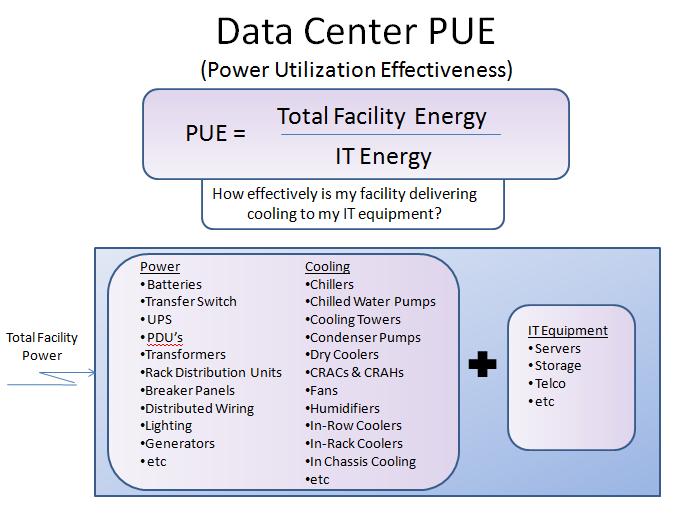
The energy to power a data center is composed of the power to drive the servers plus the power to cool the servers and any other ancillary devices such as PDUs, pumps and lighting. A common method for measuring the energy efficiency of a data center is PUE (power utilization effectiveness). The PUE of a data center is expressed in the relationship shown in Figure 1. A “good” data center is represented by a PUE of 1.2 or lower, suggesting that an additional 20% of the total power to operate the data center is powering non-IT equipment.
 
 
When reviewing the items that constitute the non-IT components of the calculations, the dominant parameters are related to the power required to drive the cooling systems. The role of CFD modeling in any of these designs is to insure that the cool air coming from the ducts, tiles or CRAH outlet reaches all the servers uniformly. This process of modeling the airflow and the resulting convective heat transfer is essential to the overall design and operation of a data center, particularly as it relates to failure-mode studies.
 
Cooling Failure Prediction
 
Failure model prediction is a key benefit that CFD modeling can provide. All cooling units need to be serviced periodically, and they completely fail occasionally. Predicting the thermal condition of the room ahead of the failure is vitally important to the data center operator. Knowing which servers will need to be shut down, or which cooling units are the most critical to the room, can be accurately and precisely predicted well in advance, and procedures can then be developed to follow in those cases.


What to Look for in a CFD Model

 
Here are some key factors to consider when seeking a CFD model:
 
  • User friendly: The last thing you need is another complex system—be sure to choose a model that is easy to use, is easy to understand and can be easy displayed to others (such as the C-Suite) who may not be as tech savvy.
  • Scalability: Be sure to choose a solution that will scale with you as new components (files, CRACs, racks, tiles, servers and so on) are added.
  • Cloud-Based: The cloud enables lower upfront investment, as it doesn’t require a dedicated server in your data center.
  • Flexible and Extensible: Be sure the system is flexible and extensible for integration with either upstream or downstream applications. For example, data from other DCIM applications can be fed directly into the system to speed model preparation.
  • Maximum Output: Look for a system that has options for output reports to ensure variety in how the information can be presented (graphs, charts, etc.). Every organization has its own methods, and this feature will benefit the usefulness of the data—it is meaningless unless it can convey the message to decision makers.

Adopted from http://www.datacenterjournal.com


Saturday, October 20, 2012

Data Center Site Tour / Technical Visit

Data Center Site Tour / Technical Visit
Data Center Site Tour
Sponsored by KDDI Hong Kong Limited (www.kddi.com.hk)

Overview

Strategic Media Asia (SMA) is pleased to announce that a Data Center Site Tour, organized by KDDI Hong Kong Limited (KDDI), will serve for individuals who successfully attend the training seminars in Data Center Facilities and HVAC Design.

Per normal practices, site tour only reserves for data center its own customers and will not open to the public. Therefore, it is definitely a rare chance for the selected participants from our Training Seminars to visit a world-class Tier 3+ purpose-built data center facility in Hong Kong.

For whoever who are interested in data center business and cooperation, SMA and KDDI will provide extra support to those companies in order to maintain the customers' satisfaction.


KDDI Hong Kong Limited

KDDI Corporation is a Fortune Global 500 companies and Top 10 Telecom Company in the World as of 2012.

Subsidiary company, KDDI Hong Kong was established in Hong Kong in 1988 and has over 20 years of experience in providing the One Stop Information Communications Technology (ICT) Solution to enterprises in Hong Kong such as providing Data Center Services, Content Delivery Acceleration (CDN), end-to-end Global Network, quality ICT Solutions and System Integration.

Through collaborative partnerships, KDDI has built up with telecommunications companies around the world in order to provide both a wide service area with high service quality. KDDI's backbone is a high-capacity fiber network that weaves the world together and its TELEHOUSE, which is an established global data center brand over the world.


For detail, please visit: www.kddi.com.hk


Telehouse Hong Kong CCC

TELEHOUSE HONG KONG CCC is one of the largest and most technologically advanced carrier neutral data center facilities in Hong Kong and in the Asia Pacific Region.

Telehouse Hong Kong CCC is a Tier 3+ purpose-built data center facility is strategically located in Tseung Kwan O, Hong Kong where around 19 km from the Central Business District and approximately 30 minutes from the Hong Kong International Airport. With virtually no risk of natural disasters in the vicinity, TELEHOUSE HONG KONG CCC is ideal for securing mission-critical business systems.

TELEHOUSE HONG KONG CCC service provides multinational corporations and local businesses in Hong Kong with neutral, secure and power-protected co-location facilities. It offers full end-to-end ICT Solutions from design to implementation such as IP connectivity, system integration, LAN and software installation, system monitoring and virtual servers as well as premium data centers.


For detail, please visit: www.telehouseglobal.com


Site Tour Details

Date 12 October 2012 (Full, next round will be arranged in Nov / Dec 2012)
Time 1:45pm - 5:00pm
Meeting Point Exit D, Kowloon Tong MTR Station (To Fuk Road, Transportation is provided)
Target Audience Data Center Operators, Consultants, Facilities Managers, E&M Engineers, Government / Corporates' IT Management, etc.
Fee Waived and Exclusive for Participants of Training Seminars
Enrollment Registration can be made during the training seminars or sent to info@stmedia-asia.com for reservation by 7 days before the Site Tour held
Remark Business Card and HKID Card (or Passport) are required for the on-site registration
Should you have any enquiry, please feel free to contact (852) 3796 3026 / info@stmedia-asia.com. Kindly visit our website (www.stmedia-asia.com) for further information.

General Guideline

- All visitors must submit full name (same as HKID) and working company to SMA for pre-registration
- All visitors must present their HKID and name card for on-site registration
- KDDI's representatives will conduct brief introduction and Q&A section before and after the Site Tour
- KDDI and SMA reserve the right to refuse any unexpected registration for the Site Tour
- In case of disputes, the ultimate decision will be reserved by KDDI and SMA

Courtesy Reminders :

- All visitors must wear and present their visitor passes during the Site Tour
- All visitors must return the visitor passes to the Reception Desk after the Site Tour
- Tour guides will accompany with all visitors during the Site Tour
- Smoking is prohibited
- Food and drinks are prohibited, except for designated dining area
- Photo taking and video recording are prohibited


© 2012 Strategic Media Asia Limited - Where IT, Facilities and Design Meet
T (852) 3796 3026 | F (852) 2184 9978 | www.stmedia-asia.com
Rm 1303, Leighton Centre, 77 Leighton Road, Causeway Bay, Hong Kong