Wednesday, January 6, 2016

Gain Qualification for Structured Cabling System Design - Become a Registered Communications Distribution Designer (RCDD)


Gain Qualification for Structured Cabling System Design in Hong Kong -
Become a Registered Communications Distribution Designer (RCDD)


Established and approved by the US Building Industry Consulting Services International (BICSI) since 1984, the RCDD credential program is a 5-day professional training (DD102: Designing Telecommunications Distribution System) which details about telecommunications spaces and horizontal and backbone distribution systems design:


- Codes, Standards and Regulations
- Principles of Transmission
- Electromagnetic Compatibility
- Telecommunications Spaces
- Work Areas
- Horizontal Distribution Systems
- Backbone Distribution Systems
- Bonding and Grounding (Earthing)
- Firestopping
- Telecommunications Administration
- Design and Construction
- Project Management
- Networking Fundamentals
- VoIP and Wireless
- Outside Plant (OSP)
- Campus Cabling


Key Content


DESIGN BASICS - Recommended design sequence, cabling infrastructure layout, terms & definitions, overview of standards & codes.


DESIGNING TELECOMMUNICATIONS ROOMS - Determining type number & size according to usable floor space, specifying power, lighting & floor loadings.


DESIGNING HORIZONTAL DISTRIBUTION SYSTEMS - Pathway sizing & routing considerations. Design rules for under-floor duct, cellular floors, conduit, & access floors. Use of ceiling distribution including ceiling zones method. Application exercises; design of under-floor conduit system & comparison with overhead plenum rated method. Specifying copper & fibre optic cabling complete with documentation methods. Examples of cable management during installation & cross connection. Installation sequence for zoned systems.


DESIGNING BACKBONE SYSTEMS - Backbone design & planning, media selection options (copper versus fibre), colour codes, backbone pathways & spaces, sleeves, slots & conduits, planning & designing cable pull boxes, fire stopping, campus backbone design.


DESIGNING EQUIPMENT ROOMS - Electrical power requirements & distribution, environmental, space & structural requirements, electrical ground & bonding. Application exercise: equipment room sizing & location.


DESIGNING ENTRANCE ROOMS - Calculating total space requirements, types of terminations & hardware, electrical protection, network demarcation. Application exercise: entrance facility case study.


RCDDs demonstrate knowledge in design, integration and implementation of information & communications technology (ICT) and related infrastructure components. All sections will be conducted by an instructor who are RCDD certified and have more than 15 years experience in lecturing plus cabling system design.


You are cordially invited to achieve the qualification with more than 5 years ICT / critical infrastructure design experience; OR at least 2 years of verifiable ICT design experience plus 3 years of additional ICT equivalents chosen from combinations of experience, approved education and approved ICT license/certification by BICSI.


Date: 18 - 22 April 2016 (5-day, Monday - Friday)
Venue: 19/F, 93 - 103 Wing Lok Street, Hong Kong (Exit A2, Sheung Wan MTR Station)

5 Days Program Fee: Special rate for early bird enrolment, please refer to www.stmedia-asia.com/rcdd.html. (Including course materials and a digital copy of Telecommunications Distribution Methods Manual (TDMM), 13th edition)


Completion Certificate


After 5-day training (DD102: Designing Telecommunications Distribution System) and passing the online test* in the last day of training, a completion certificate will be granted by the BICSI Authorized Design Training Provider.

* A personal laptop is recommended for the online test.


Achieving RCDD Qualification *


BICSI recommends 125+ hours of self-study (over a period of 5-weeks) following the formal 5-day training (DD102). Examination Format: 2.5 hours, 100 questions, closed-book, multiple choice (knowledge- and application-based questions, minimum 70% correct to pass). The exam (apply through BICSI) can be scheduled at www.pearsonvue.com/BICSI (with an assigned candidate number and scheduling information).

* BICSI Membership, Exam Application and Scheduling Fees are not included in the 5-day program mentioned above.


Enrollment & Registration


Please complete and return an Application Form together with a crossed cheque made payable to “Strategic Media Asia Limited” - Room 403, 4th Floor, Dominion Centre, 43 - 59 Queen's Road East, Hong Kong.

For the RCDD program details, please visit www.stmedia-asia.com/rcdd.html.


About the Organizer


Strategic Media Asia Ltd (SMA) is one of the Approved CPD Course Providers of the Chartered Institution of Building Services Engineers (CIBSE). SMA exists to provide an interactive environment and opportunities for members of IDC industry and engineers to exchange professional views and experience on data center design, critical infrastructure system, electrical and mechanical facilities, etc.

SMA connects IT, Facilities and Design. For details, please visit our website at http://www.stmedia-asia.com/trainings.html.


Wednesday, December 23, 2015

Best Wishes for a Prosperous New Year

May this Christmas bring you comfort, joy, peace
and happiness to last throughout the coming year 2016!


Thursday, December 3, 2015

Further Learning in Electrical Design for Mission Critical Supply + Technical Visit to Power Quality Centre


Designing an electrical system for mission critical purpose or data center can be a real challenge. Further to a training section in Data Center Facilities Design and Infrastructure Engineering, an advanced unit - Electrical Design for Mission Critical Supply - is going to launch in December 17 - 18, 2015.

The 2-day electrical design course introduces the power system design that support typical data centers or critical facilities. It prepares individual to fully understand the mission critical supply system, from power components to distributions and efficiency; from power requirements to designed, testing, commissioning and maintenance.


Day 1

- Concept on primary supply and secondary supply
- Power flow in mission critical supply system
- Features of major equipment for critical supply

  (1) Uninterrupted power supply (UPS) and power storage
  (2) Backup generator
  (3) Automatic transfer switch
  (4) Static transfer switch
  (5) Isolation transformer

- Efficiency assessment
- Power quality review


Day 2

- Configuration diagram of critical supply (N+1 / 2N) design & analysis
- Review of cable sizing to incorporate harmonics content
- Earthing system design
- Testing and commissioning requirements
- Brief of Systems Merging Appraisal Test (SMAT)


Date: 17 - 18 December 2015 (Thursday - Friday)
Time: 10:00 – 17:30
Venue: 19/F, New Victory House (Officeplus), 93 - 103 Wing Lok Street, Sheung Wan, Hong Kong
Fee: Special rate for CIBSE / HKIE all membership classes


For details, please refer to http://www.stmedia-asia.com/newsletter_6.html.


Technical Visit to Hongkong Electric Power Quality Centre
and Smart Power Centre


Voltage dips and harmonics are two major issues affecting power quality. To share the knowledge, Hongkong Electric has established a Power Quality Centre which enables participants to understand more about power quality and the ways to safeguard the power supplies for their important services.

The Power Quality Centre is equipped with a voltage dip generator and different mock-up installations to demonstrate the effects of power quality on sensitive equipment, as well as the voltage dip ride-through solutions for various types of equipment.


The “Smart Power Centre” provides advice on the choice of electrical equipment or appliances as well as general knowledge on the safe and smart use of electricity. The centre mainly focuses on introducing the effectiveness and easy use of electrical appliances, intelligent panel and automatic lighting control.


Further to the critical facilities / electrical design courses, you are cordially invited to attend the technical visit / guided tour by the HK Electric:


Date: 8 January 2016 (Friday) *  (Full, updated on 21 December 2015)
Duration: 15:00 - 17:00 (2 hours)

Assembly Time: 14: 45 - 15:00
Assembly Point: G/F Lobby, Electric Centre, 28 City Garden Road, North Point, Hong Kong
(Next to the City Garden - Exit B, Fortress Hill Station)


* Pre-registration required
* Free admission for the technical visit
* Intake target: 15 - 20 participants
* Seats are limited. Priority will be given to the CPD course's participants


For the visit details, please refer to RUNDOWN.


Enrollment & Registration

Kindly complete and return an Application Form together with a crossed cheque made payable to “Strategic Media Asia Limited” - Room 403, 4th Floor, Dominion Centre, 43 - 59 Queen's Road East, Hong Kong.


About the organizer


Strategic Media Asia Ltd (SMA) is one of the Approved CPD Course Providers of the Chartered Institution of Building Services Engineers (CIBSE). SMA exists to provide an interactive environment and opportunities for members of IDC industry and engineers to exchange professional views and experience on data center design, critical infrastructure system, electrical and mechanical facilities, etc.

SMA connects IT, Facilities and Design. For details, please visit our website at http://www.stmedia-asia.com/trainings.html.


Tuesday, November 24, 2015

Data Center Design Consideration: Fire Suppression

So far we explore the following issues when designing a data center

(1) Site Selection
(2) Space Planning
(3) Cooling
(4) Redundancy

Now it comes to the firefighting operations which can be critical for your facilities and planning.


An average 15,000 sq. ft data center carries around 2,700 kW load and releases nearly 750 tons of heat daily. Generated by small blade servers and overcrowded racks, loads of this size burden the data center’s electrical circuits, which may not be properly grounded, causing equipment to overheat in areas without proper cooling.


This is typically found in some data center built in several years ago (usually before 2000) and inside an old / pre-existing industrial / commercial buildings in which the original purpose is not for data center and the renovation and facilities' improvement are far more complicated and difficult.


Specifying the appropriate fire detection and suppression systems for each data center will increase its survivability. Most fires in mission critical facilities can be prevented if fire detection and suppression systems are properly designed, installed and commissioned in accordance with applicable standards.


FIRE DETECTION SYSTEMS


The unique airflow patterns within a data center create a challenge for smoke and fire detection systems. Unlike a typical commercial building, the data center is outfitted with hot and cold aisles and underfloor and overhead spaces, each separated to contain airflow within the space. For this reason, conventional detection methods don’t meet the data center’s needs. Instead, additional fire detection strategies need to be considered concurrently to achieve reliable protection.

Each data center will determine whether the facility needs an Early Warning Smoke Detector (EWSD) or a Very Early Warning Smoke Detector (VEWSD). The EWSD system provides detection typically at the first sign of smoke, while a VEWSD will expose an incipient fire smoldering for hours or days before a flame ignites.


Early Warning Smoke Detector (EWSD)


Automatic spot-type detectors are the most common form of EWSDs, available in ionization and photoelectric types. Using ceiling sensors, these passive detectors rely heavily on high airflow for their optimal performance. Duct detectors are installed in the supply and return ducts of HVAC systems to prevent smoke spread by initiating control of fans, dampers, etc. As they sense particles of combustion, they transmit a supervisory alarm to the fire alarm panel urging it to shut down the air handling unit.


The International Building Code requires high-rise buildings with air in the return and exhaust air plenums with a capacity greater than 2,000 cfm to have a duct smoke detector in a serviceable area downstream of the last duct inlet.


Very Early Warning Smoke Detector (VEWSD)


An aspirating smoke detection system, on the other hand, is an active VEWSD, constantly sampling particles of air for the presence of visible or invisible smoke, with its piping network, an aspirating fan and a highly sensitive detector. Less dependent on the airflow in the room to transport smoke to the detector, the VEWSD carries extremely low accidental discharge rates, with a maximum transport time from the most remote sampling port not to exceed 120 seconds. Air sampling systems are specified where very early detection is crucial, in data centers and other high-tech communications facilities.


Cross-zoned Detection


A critical facility should consider employing its smoke detectors as part of a cross-zoned scheme, which requires the installation of two smoke detectors in the same area that are run on separate circuits.


In this case, when a fire is detected, the panel will require activation of both circuits before the release of a fire-extinguishing agent. Cross-zoned detection systems minimize possibility of accidental discharge due to false alarm and may provide an additional opportunity for on-site personnel to eliminate an impending risk factor. (In a data center, only smoke detectors should be cross-zoned, heat detectors need not be.)


FIRE EXTINGUISHING SYSTEMS


While detection is crucial to alerting personnel in the room, fire damage can be minimized where an effective extinguishing system is installed and properly maintained. Both water and gas-based fire suppression systems can be found in today’s data centers.


Water-based Suppression Systems


Water-based extinguishing systems fight fires in two dimensions, both in the air and on the equipment, but not underneath equipment cabinets and other computer room fixtures. Ideal for structural protection, water-based extinguishing systems are available in either wet or pre-action configurations.


"Wet Configuration"


Pipes in a wet system are filled with water at all times, discharging it over the fire when the sprinkler head fuses due to heat build-up. Although the accidental discharge rates of a wet sprinkler system are minimal, an accidental discharge due to a damaged sprinkler activation pipe or fitting leak could cause considerable damage to information technology equipment, possibly resulting in a large or even fatal loss in data processing.


"Pre-action Configuration"


The more appropriate water-based extinguishing system for a data center is a pre-action system, available in both single and double interlock options, as its pipes remains dry until a reliable fire condition is detected.

The single interlock pre-action system requires the activation of heat or smoke detectors before water enters the piping, discharging it over fire upon fusion of a sprinkler glass bulb or solder link due to heat buildup in the space. The Loss of air due to a damaged sprinkler will transmit a supervisory alarm at the control panel.


With the double interlock system, water again enters the pipes upon heat detection and loss of air due to fusion of glass bulb or solder link. In both cases, when the sprinkler is merely damaged or there is a simple pipe leak, the pre-action system will transmit the supervisory alarm signal, but keep the piping networks dry.


"Water Mist System"


Recently developed very fine fire spray or a water mist system provides another option for fire suppression systems. Requiring less water to suppress a fire than traditional sprinkler systems, the water mist method extinguishes a fire by absorbing its heat and by discharging very fine droplets of water.


Water mist systems require unique hardware such as steel pipes, water container, pump, gas, nozzles, strainers, detection, and a panel. Water mist may provide a similar level of protection as a sprinkler system. For data centers, water mist systems use stainless steel pipes to avoid corrosion which causes the development of pin leak holes in sprinkler piping.


Gaseous Suppression Systems


Gas-based fire suppression systems fight fires in three dimensions, in the space itself and under the equipment cabinets. Designed to protect the equipment and data in process, gas-based systems do not leave a residue or require any clean up of the equipment after it discharges.

Similar to the pre-action system, clean agent extinguishing pipes contain no gas. Gas will discharge upon activation of the cross-zoned detection system and subsequent mechanical and electrical systems shut down, flooding the room in 10 sec (with the exception of inert gases, which are required to discharge in 60 sec). Gas in the room is specified to maintain concentration for as long as 10 min to obliterate smaller fires in any hard-to-reach places.


When the gas is discharged, your data center space has to be air-tight, with all door, floor, and ceiling openings sealed. The gases used, including FM 200, FE 25 (HFC 125), Novec 1230 and inert gasses including Inergen and argon, are odorless, non-toxic, non-corrosive, electronically non-conductive, and environmentally-friendly.


Kindly note the gas storage tanks need to be refilled and preparation for another incident. For this reason, some mission critical facilities are now reserving back-up tanks, maintaining twice as much gas storage at all times.


Integrated Systems


A typical data center will be outfitted with both water-based fire extinguishing systems and gaseous systems. If the fire isn’t suppressed by the gas system, the sprinkler system will subsequently activate, but is otherwise maintained as the official back-up extinguisher.


DATA CENTER FIRE CODES


A number of NFPA fire codes are applicable to the data center environment. Each governing a different aspect of the facility from design through maintenance, these standards work in concert to protect your mission critical facility from the threat of a fire. Here are examples


NFPA 10 Standard for portable fire extinguishers
NFPA 25 Standard for inspection, maintenance and testing of water-based fire protection systems
NFPA 72 National Fire Alarm Code
NFPA 75 Standard for protection of information technology equipment
NFPA 76 Standard for fire protection of telecommunications facilities


Please refer to the complete list of NFPA standards from National Fire Protection Association.


About the Blogger


Strategic Media Asia Ltd (SMA) is one of the Approved CPD Course Providers of the Chartered Institution of Building Services Engineers (CIBSE). SMA exists to provide an interactive environment and opportunities for members of IDC industry and engineers to exchange professional views and experience on data center design, critical infrastructure system, electrical and mechanical facilities, etc.

SMA connects IT, Facilities and Design. For details, please visit our website at www.stmedia-asia.com/trainings.html.


Tuesday, October 20, 2015

Finance & Investment Forum for Data Center, Hosting, Cloud - Hong Kong


Take the temperature of Asia’s fast growing Data Center, Hosting, Colocation and Cloud businesses
Discover key investors, network and collaborate at the premier Asia forum for the sector


Finance & Investment Forum for Data Center, Hosting, Cloud

Hong Kong, 12 November 2015

Asia’s premier forum for the leadership of data center, hosting and cloud businesses and investors returns for the third year to Hong Kong. It continues to offer a unique platform for expert opinion and provides global market developments and forecasts. You are invited to join the annual marketplace for the leadership of publicly quoted and private data center, hosting and cloud businesses to network and engage with investors.


Register before 12 November 2015


With the Asia region now reaching an exciting stage in the development of data centers, opportunities for investment in this fast growing sector are increasing. The Finance and Investment Forum Asia hosted once again in Hong Kong is attended by experts from private equity firms, investors, funds, publicly quoted and private companies engaged in the data center, hosting and cloud sector, property specialists and legal counsel.


Why attend?

Outstanding speakers from around Asia will share their knowledge about the future of data center, cloud and hosting. Check out the agenda here.

  • exceptional networking, a hallmark of the FIF events will be at its best with the leadership of operator businesses, investors and financiers from across the region attending
  • Considered to be the “best place to take the temperature of the industry,” FIF offers several critical advantages to all attendees including
    • exposure to key investors (providing often difficult or rare opportunities for many companies across the sector) - 30% of attendees are typically investors
    • exposure to key influencers (such as the key players to support fund raising or an IPO)
    • high level analysis of the market for datacentre and cloud assets, company valuations and investor experience


Key Speakers include:

Claude Achcar, Managing Director, Actel Consulting
Nicholas Chan, Partner, Squire Sanders
Herbert Chan, General Manager, Grand Ming Group
Reynaldo R Huergas, President, IP Converge Data Services Inc
Robin Khuda, Founder, AirTrunk
Teddy Ko, AVP, HKT
Asher Ling, Chief Operating Officer, Kingsland Development
Hon Charles Mok, Legislative Councillor Information Technology, Hong Kong SAR
Daniel Newman, CFO, GDS
Kok-Chye Ong, Head of Investments, Data Centre, Keppel Telecommunications & Transportation
Ng Wan Peng, Chief Operating Officer, MDeC
Everett Thompson, CEO, WiredRE
Steve Wallage, Managing Director, BroadGroup Consulting
Thomas Wong, Executive Director, OneAsiaNetwork


Some of the key questions international experts will discuss in this year’s programme include:

•  What is the forecast for Asia data center, hosting and cloud markets?
•  Is a greater regional/international market presence a necessary part of data center ownership strategies?
•  What will be the biggest change in demand drivers in 2015-2016?
•  What is the current and emerging Private Equity specialist view of data center investments?
•  Where is hot to invest? What emerging markets are ripe for growth?
•  What role will M&A play in the next phase of growth?
•  Who will be the winners and losers?


Visit the programme at www.fif-asia.com/programme


The conference day begins with an investor breakfast with a series of short pitches made by companies currently seeking investment for a variety of projects in the sector. Always aiming to deliver exceptional insight and high networking values, the Forum, first established in 2007 is now regarded as the premier networking and content platform internationally.


Register before 12 November 2015


Strategic Media Asia Limited is one of the media partners for the FIF Asia - Hong Kong. You are cordially invited to join the event in November 12, 2015. For details, please visit www.fif-asia.com.


Monday, October 19, 2015

Avoid 30 - 40% Wastage in Refrigeration & Air-conditioning (RAC) Systems

The wastage of energy and costs in Refrigeration and Air-conditioning (RAC) systems is a real challenge. AC’s that drip water into the street because of excessive condensation illustrate that the compressor is over-running to achieve the cooling output required in the rooms they serve. Refrigerators that require de-icing cycles to remove the build-up of ice on the evaporator unit, again graphically illustrate that the compressor is running longer than is needed to achieve the cooling required for the refrigerated produce.


The new technology* employs two temperature sensors in an algorithmic energy trading control arrangement to monitor the thermodynamic (room or space temperature) and the hydraulic (refrigerant supply) performance of the connected air conditioning, heating or refrigeration system. As a result it reduces up to 30-40% of the running time on the compressor which accounts for 95% of HVAC energy consumption.


Bundled with a 2-day CPD training in the Air-conditioning System Design for Data Center, this is a 1-hour information seminar introducing an innovative energy optimizer / economizer for compressor-based HVAC systems. It targets to HVAC practitioners such as consulting engineer, energy assessor, facilities managements and building services engineers.


* Internationally Patented - Optimized Refrigerant Supply (ORS®)

Demonstrated through a number of case studies, the seminar session showcases how ORS® prevents the wastage of energy and costs that arise from over-running the compressors. Since the compressor is by far the main consumer of electrical power in any RAC system, the avoided wastage is very significant and the session will illustrate that ORS® prevents wastage of energy and costs in the region of 30-40%.


CPD Training in Air Conditioning System Design for Data Center (2-day)

Date: November 5 - 6, 2015 (Thursday - Friday)
Time: 10:00 - 17:30 (with 1 hour lunch break)
Venue: 14/F, On Lok Yuen Building, 25-27A Des Voeux Road Central, Hong Kong


The 1 hour seminar session mentioned above (during 16:30 - 17:30, 5 November 2015) is sponsored by The Getz Corporation (HK) Limited and Agile8 Consulting Limited.


For details, please visit www.stmedia-asia.com/trainings.html.


About the Organizer


Strategic Media Asia Ltd (SMA) is one of the Approved CPD Course Providers of the Chartered Institution of Building Services Engineers (CIBSE). SMA exists to provide an interactive environment and opportunities for members of IDC industry and engineers to exchange professional views and experience on data center design, critical infrastructure system, electrical and mechanical facilities, etc.

SMA connects IT, Facilities and Design. For details, please visit our website at www.stmedia-asia.com/trainings.html.


Tuesday, September 15, 2015

Course in Air Conditioning System Design for Data Center


A data center houses hundred / thousand of IT equipment and servers for mission critical purpose. These IT facilities consume large amount of energy and generate heat during operations. Particular cooling strategies and power system design are therefore required for a data center.


This is an advanced learning section for data center design. It targets to engineers involved in designing or handling HVAC (Heating, Ventilation, and Air Conditioning) equipment for mission critical facilities and data center projects.


We introduces various classifications of HVAC systems and the associated distribution systems for mission critical facilities. Each system type is evaluated based on the performance for energy efficiency, water use and comfort performance. Participants are able to make informed decisions about the best choices of cooling systems for mission critical applications and how system can best meet your project goal and SLA (Service Level Agreement).


The course highlights design principles such as psychrometric chart, cooling load calculation / estimation, etc. and the design considerations such as air distribution, availability and redundancy, common mistakes, Computer Fluid Dynamic (CFD) model, integration with MEPs (Mechanical, Electrical and Water Plumb), etc.


Overall we train participants to understand different factors, from design, testing, commissioning, sustainability and efficiency, that significantly impact the cooling system of data centers.


  • Datacom Equipment Power Trends and Cooling Applications
    • (a) load trends and their application
    • (b) air cooling of computer equipment
    • (c) liquid cooling of computer equipment

  • Design Consideration
    • (a) design criteria
    • (b) HVAC load
    • (c) computer room cooling
    • (d) air distribution
    • (e) liquid cooling
    • (f) availability and redundancy
    • (g) integration with other MEP system
    • (h) controls
    • (i) computer fluid dynamics

  • Testing and Commissioning
    • (a) air cleanliness test
    • (b) heat load test
    • (c) factory acceptance test
    • (d) site acceptance test
    • (e) integrated performance test (IST)

  • Sustainable Design
    • (a) combined heat power plant (CHP)
    • (b) solar cooling
    • (c) geothermal cooling
    • (d) evaporative cooling
    • (e) air side economizers
    • (f) desiccant unit

  • Energy Efficiency
    • (a) power usage effectiveness
    • (b) chilled water plant optimization
    • (c) water side and air side equipment
    • (d) part load operation
    • (e) controls and energy management
    • (f) LEED certified data center
    • (g) building energy code


    For registration and course details, please visit www.stmedia-asia.com/newsletter_6.html.

    "Air Conditioning System Design for Data Center" is an approved CPD course by Chartered Institution of Building Services Engineers (CIBSE).


    About the Organizer - SMA


    Strategic Media Asia Ltd (SMA) is one of the Approved CPD Course Providers of the Chartered Institution of Building Services Engineers (CIBSE). SMA exists to provide an interactive environment and opportunities for members of IDC industry and engineers to exchange professional views and experience on data center design, critical infrastructure system, electrical and mechanical facilities, etc.

    SMA connects IT, Facilities and Design. For details, please visit our website at www.stmedia-asia.com/trainings.html.


    Tuesday, August 25, 2015

    Data Center Design Case Study

    When the reliability demand is high and the data center has to work around pre-existing building constraints, there are significant design challenges.


    With approximately 120,000 sq ft of white space divided into eight Tier III, 2 MW power data halls, the 20 MW data center meets a number of design challenges before construction even began.

    The data center was originally the site of an old manufacturing facility. Coupled with the owner’s building requirements, this created a few challenges to the data center’s electrical distribution system design. Here’s a look at how Environmental Systems Design, working together with the other members of the building team, was able to solve them.


    Challenge No. 1: The transformer


    In an effort to maintain consistency across others data centers, the corporation likes to specify company-standard mechanical, electrical, plumbing (MEP), and fire protection equipment for all of its mission critical facilities. However, much of this equipment is designed for outdoor use, and because this particular facility has very limited outdoor space, significant adjustments had to be made for the transformer and switchgear equipment to work indoors.


    For example, the heavy transformer couldn’t be placed on the raised floor designed for the data hall and electrical room space and wouldn’t be able to be removed from the building at the end of its useful life, as the 2500 kVA transformers each weigh approximately 16,000 lbs.

    Instead, the facility was designed with the intent of moving in the transformer prior to the raised floor construction. Coordinating with the architect, saw cuts were designed into the pre-cast panels on the side of the building to make it easier for the contractor to remove/replace the exterior wall to get the transformer out for future installations or replacement.

    Additionally, because the liquid-filled transformers specified are typically used outdoors, special design considerations were needed for the electrical room to contain the fluid in the event of a leak. A 4-in. metal dam was constructed along the perimeter of the room to contain the liquid, while perforated raised-floor tiles were installed around the transformer to facilitate the flow of liquid to under the floor.


    Challenge No. 2: Uniform design


    The owner wanted a repeatable, scalable design for each of the eight data halls to both create uniformity across the facility and provide the ability to build out data halls as needed over time. However, due to existing building conditions, including the different quantity and compact nature of the structural columns on the building’s first and second floors, an offsite modular construction design was eliminated.

    Instead, the solution was to bring each component of the mechanical and electrical systems into the facility individually and build out the data halls one at a time as identically as possible.


    Challenge No. 3: Medium-voltage equipment


    Because the switchgear and transformers were located inside the building, medium-voltage (MV) feeders were routed throughout. The MV system itself was daisy-chained so it had to be installed and commissioned in its entirety when the first of the eight data halls were installed.


    The active MV system presents a potential risk to workers during construction. Therefore, the MV feeders and conduit were routed through the ceiling of the first floor for safety, stubbing back up through the second floor slab and directly into the equipment. The feeders for the first floor equipment were routed similarly under the first floor slab. Because the eight data halls will be built out over time, this technique permits construction on the floor without subjecting workers to the active feeders.


    Challenge No. 4: Switchgear and metering equipment


    With very limited space for outdoor equipment, there wasn’t enough room for the utility’s 34.5 kV ground-level switchgear and metering. In addition, this equipment has not been fully vetted for the application and was seen as a risk by the owner. The only option was for the utility’s switchgear and metering to be pole mounted. This meant that the site’s 20 poles had to be spaced 20 ft from each other, taking up 400 ft of linear space on a site with little outdoor area.


    The Reliability


    Utility Service:

    2N, or two separate utility sources/feeders, one general source and the second as backup. The switchgear is daisy-chained together, creating a connection from one switchgear to another down the line so that the power can feed into one switchgear, back out and into the other, rather than having multiple connections to the site.


    Backup generators:

    N+1 redundant swing generator. While each of the eight data halls has its own backup generator, another redundant swing generator for every two to three halls was designed as well, providing additional backup (a total of four swing generators in all). This provides an extra level of redundancy without the cost of providing an additional backup for each generator.


    UPS system and distribution (2N):

    Two sides to the electrical system were designed, where each side is a mirror of the other. The benefit of the 2N system topology allows for maintenance or a fault to occur on one of the sides, while still maintaining a completely active data center.


    About Strategic Media Asia Ltd


    Strategic Media Asia Ltd (SMA) is one of the Approved CPD Course Providers of the Chartered Institution of Building Services Engineers (CIBSE). SMA exists to provide an interactive environment and opportunities for members of IDC industry and engineers to exchange professional views and experience on data center design, critical infrastructure system, electrical and mechanical facilities, etc.

    SMA connects IT, Facilities and Design. For details, please visit our website at www.stmedia-asia.com/trainings.html.


    Wednesday, July 22, 2015

    Registered Communications Distribution Designer RCDD

    We are pleased to announce a prestige international qualification, Registered Communications Distribution Designer (RCDD), accredited by US Building Industry Consulting Services International (BICSI) for structured cabling system design is now available in Hong Kong.


    Further to the Critical Facilities Design Courses - Data Center and Electrical and Air Conditioning System, the RCDD credential program (DD102: Designing Telecommunications Distribution System) is an intensive 5-day core training which details about designing telecommunications spaces and horizontal and backbone distribution systems:


    Design Basics - Recommended design sequence, cabling infrastructure layout, terms & definitions, overview of standards & codes.


    Designing Telecommunications Rooms - Determining type number & size according to usable floor space, specifying power, lighting & floor loadings.


    Designing Horizontal Distribution Systems - Pathway sizing & routing considerations. Design rules for under-floor duct, cellular floors, conduit, & access floors. Use of ceiling distribution including ceiling zones method. Application exercises; design of under-floor conduit system & comparison with overhead plenum rated method. Specifying copper & fibre optic cabling complete with documentation methods. Examples of cable management during installation & cross connection. Installation sequence for zoned systems.


    Designing Backbone Systems - Backbone design & planning, media selection options (copper versus fibre), colour codes, backbone pathways & spaces, sleeves, slots & conduits, planning & designing cable pull boxes, fire stopping, campus backbone design.


    Designing Equipment Rooms - Electrical power requirements & distribution, environmental, space & structural requirements, electrical ground & bonding. Application exercise: equipment room sizing & location.


    Designing Entrance Rooms - Calculating total space requirements, types of terminations & hardware, electrical protection, network demarcation. Application exercise: entrance facility case study.


    RCDDs are required to demonstrate proficiency across a wide range of areas within structured cabling systems, including network, outside plant, wireless and electronic safety and security design, data centers and building automation systems (BAS).

    The expanded knowledge enables the RCDD to advise the owner/end user of the appropriate IT, AV and security requirements. The RCDD has learned to perform the design tasks related to these systems, including construction drawings and specifications.


    You are cordially invited to join the 5-day RCDD credential program in Hong Kong. For program details, exam criteria and application, please visit www.stmedia-asia.com/rcdd.html.


    About the organizer


    Strategic Media Asia Ltd (SMA) is one of the Approved CPD Course Providers of the Chartered Institution of Building Services Engineers (CIBSE). SMA exists to provide an interactive environment and opportunities for members of IDC industry and engineers to exchange professional views and experience on data center design, critical infrastructure system, electrical and mechanical facilities, etc.

    SMA connects IT, Facilities and Design. For details, please visit our website at http://www.stmedia-asia.com/trainings.html.


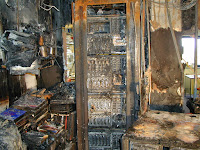
     

    Friday, July 3, 2015

    Data Center Design Consideration: Site Selection

    So far we explored three criteria when constructing a data center: Redundancy, Cooling and Space Planning. However, the location where you build your mission critical facilities is also an important design decision. Locations that incurs high costs with significant threats to availability or limits the functions of a data center should not be good choices.

    So, please review the following criteria when choosing the best location. We understand that not all of these criteria will be relevant but some may be even more critical in certain industries compared with others. And, of course, your final decision should take a balance of various considerations.


    How far to access by your employees


    The first issue is the distance between your data center and main office. Unlike Hong Kong, one of the small cities in the world, can you access your data center within 1 - 2 hours by driving or other transportation? Renovated industrial buildings or even an existing structure in a city / next to a transportation network that are already owned offers plenty of space. In such cases, network latency is seldom a concern (it is especially important for Carrier Neutral Data Centers). The longer distance incurs higher latencies and it is inconvenient if employees must work in both locations.


    How far to access by your customers

    It depends on a data center use and targets. Most colocation sites can be reached by their customers within a short period of time. Financial companies, for example, often build the facilities that are physically close to trading markets (the “customer”). This selection enables faster trades owing to lower latencies between the data center and the market, potentially increasing the company’s profits. In other cases, a company targeting, say, a foreign market might consider building a data center in another nation to best serve patrons there.


    Operations and Maintenance

    Choosing a data center's location where your services providers, contractors and stakeholders are available is important. Apart from construction, your data center genset, for example, should be supplied and refilled by a diesel provider. Your site selection affects your choice of who can and will be involved with your data center.


    Physical Risk

    Earthquakes can cause structural damage to buildings, topple server racks and destroy infrastructure like power and networking lines. A good data center design in such a location implements safeguards against such events, but these additional features increase the construction cost—maybe dramatically. Vibrations from public transport and nearby airports can affect equipment, as can electromagnetic interference from antennas and other sources. Beyond such incidental conditions are issues like political instability and crime.

    Other threats like flooding, fires and volcanoes can pose a particular danger in some locations.


    Climate

    Cooling is a major operating expense, but the colder the local climate, the greater the potential for using free cooling and for greater cooling efficiency (even with mechanical cooling).


    Physical Infrastructure

    A good site will offer enough power and water and sufficient networking bandwidth to support the data center. The cost of these resources is as important as their availability.


    Real Estate

    The cost of land or an existing building matters. If the property / building is not owned by the data center owner, the leasing terms, periods and responsibilities must be carefully considered and negotiated with the landlord.


    Building Structure

    A data center houses mission critical facilities, servers, cabinet and racks. Though an existing building may be the best option for your new data center, this approach raises a number of unique challenges. You should evaluate the building structure relative to the weight of racks and other equipment, as well as determining if the power and other infrastructure are sufficient or can be reasonably improved to meet your needs. A poorly chosen building can necessitate numerous retrofits, such as freight elevators, raised ceilings and so on.


    Local Law and Taxes

    Property and taxes can be a serious downside to a given location which may seriously affect the operations and capital costs of your data center. In addition, the data ownership and privacy law are different in cities / countries. China, for example, requests special licenses and permission to run a data center and host sensitive information.


    About the Blogger

    Strategic Media Asia Ltd (SMA) is one of the Approved CPD Course Providers of the Chartered Institution of Building Services Engineers (CIBSE). SMA exists to provide an interactive environment and opportunities for members of IDC industry and engineers to exchange professional views and experience on data center design, critical infrastructure system, electrical and mechanical facilities, etc.

    SMA connects IT, Facilities and Design. For details, please visit our website at http://www.stmedia-asia.com/trainings.html.